Year of Youth 2026: Which Housing Schemes Can Young Pakistanis Actually Use?
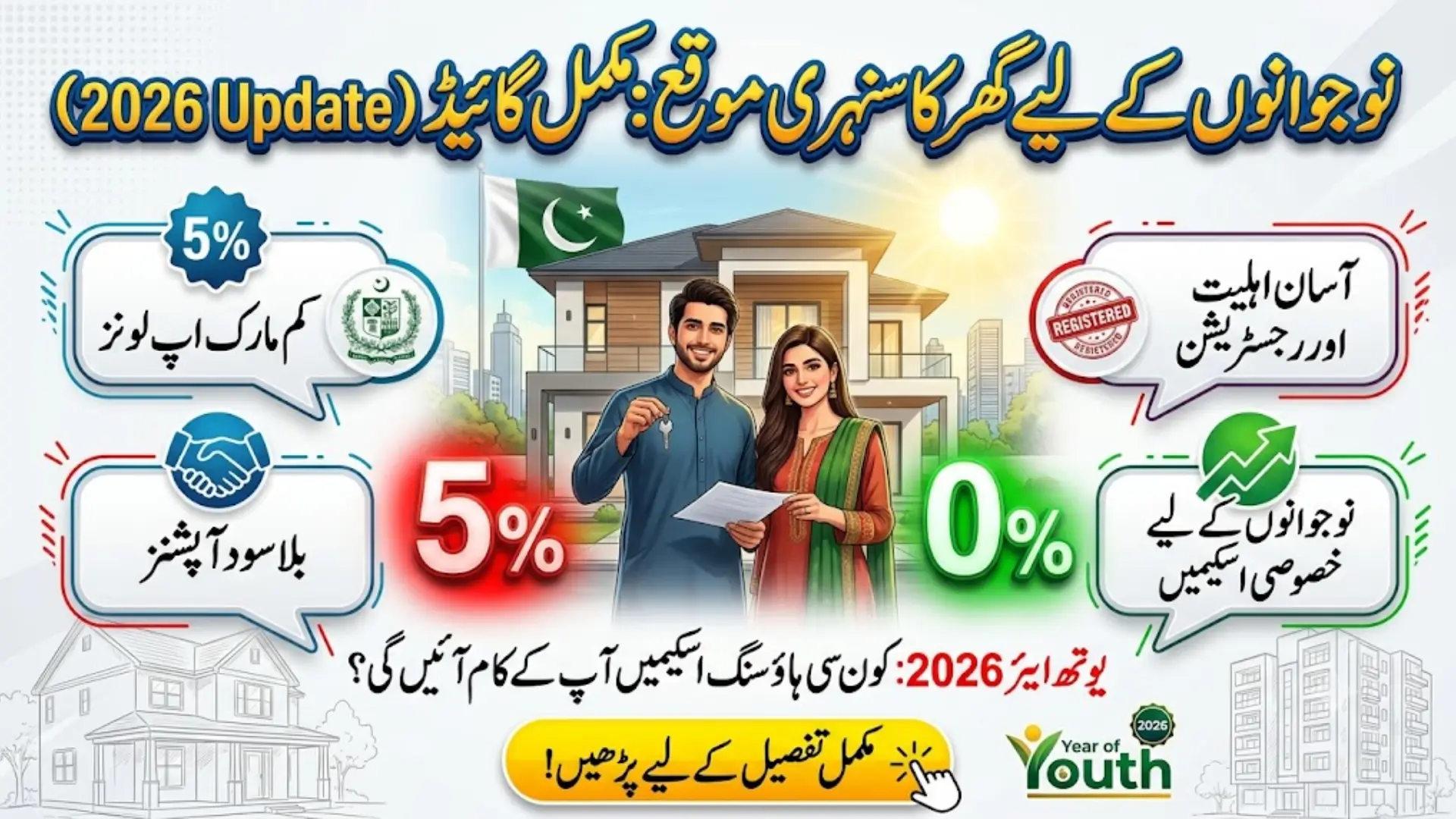
Punjab Chief Minister Maryam Nawaz has declared 2026 the “Year of Youth,” rolling out a wave of welfare initiatives aimed at young Pakistanis — from interest-free business loans to skills training and, importantly, housing support. But if you’re a young professional or a newly married couple trying to figure out how any of this actually helps you buy or build a home, the announcements alone don’t tell the full story. This guide connects the dots: here’s exactly which housing schemes young Pakistanis can realistically use in 2026, and what you need to qualify.
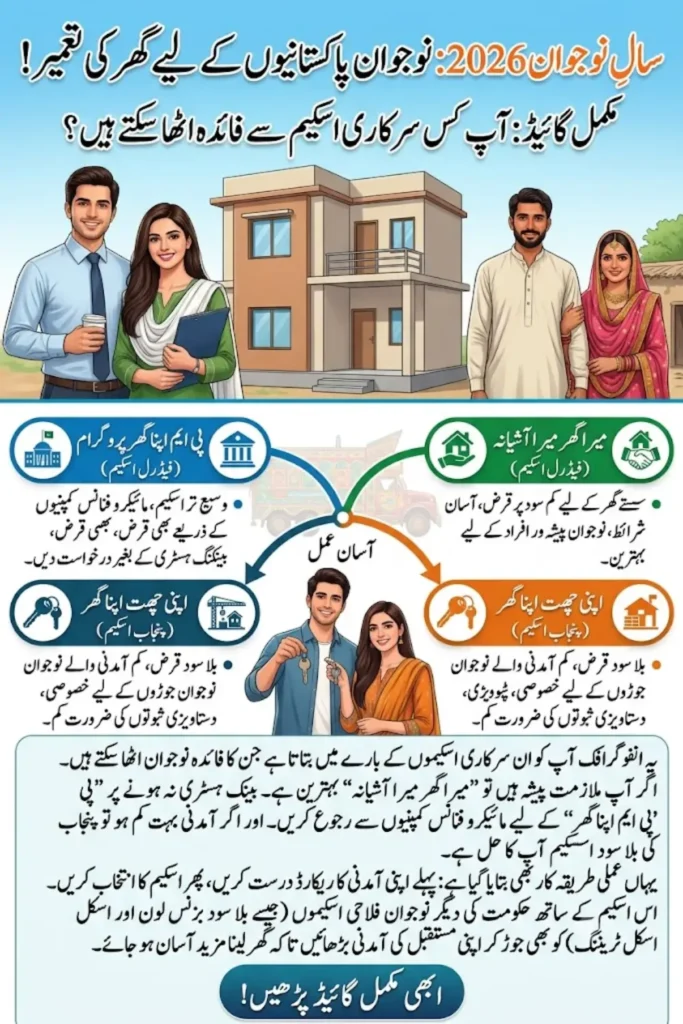
What Is the “Year of Youth” Initiative?
The Year of Youth is a policy focus declared by the Punjab government for 2026, bringing together several welfare programs under one banner aimed specifically at empowering young people. It comes at a time when many young, educated Pakistanis face a difficult combination: high unemployment among graduates and rising living costs that make independent milestones — like starting a business or buying a first home — feel increasingly out of reach.
The initiative broadly covers four areas:
- Business loans — interest-free and low-interest loans up to Rs. 500,000 for young entrepreneurs in agriculture, technology, and services
- Housing support — access to affordable housing programs for low and middle-income families
- Skills development — free training in IT, automotive, construction, and hospitality sectors
- Education support — scholarships and technology assistance like subsidized laptops and tuition support
For this article, we’ll focus specifically on the housing piece, since that’s usually the part with the least clear guidance for young applicants.
Why Housing Is Especially Hard for Young Pakistanis Right Now
Before looking at solutions, it’s worth understanding why this specific age group struggles the most:
- No property history: Young applicants rarely have an existing property to sell or leverage, unlike older buyers who may be upgrading from an existing home.
- Limited credit history: Many young professionals haven’t built the kind of banking or credit relationship that traditional lenders prefer to see.
- Early-career income: Salaries in the first several years of a career are typically lower, making standard commercial mortgage rates especially punishing.
- Competing financial priorities: Marriage costs, starting a family, and early-career business ambitions often compete directly with saving for a home down payment.
This is exactly the gap that subsidized government housing schemes are designed to close but only if you know which one actually fits your situation.
Also Read: Affordable Housing Finance Scheme 2026 – 5% Markup, Rs. 10 Million Loan Guide
Housing Schemes Young Pakistanis Can Apply For in 2026
1. Mera Ghar Mera Ashiana (Federal Scheme)
This is the federal government’s main subsidized housing finance scheme, available nationwide through participating banks.
- Loan amount: Up to Rs. 10 million
- Markup rate: Flat 5%
- Tenure: Up to 20 years
- Best for: Young salaried professionals or self-employed individuals with a documented, stable income
This is usually the strongest option for young people who already have a job or a registered business, since the long 20-year tenure keeps monthly installments manageable even on an early-career salary.
2. PM Apna Ghar Programme (Federal Scheme)
A larger, nationwide initiative with a five-year Rs. 3.2 trillion allocation targeting 500,000 new homes across Pakistan. A recent update now allows NBFCs and microfinance companies to offer this financing too, which is particularly useful for young applicants who don’t have an established relationship with a traditional bank.
- Loan amount: Up to Rs. 10 million (banks/NBFCs) or Rs. 5 million (microfinance companies)
- Markup rate: 5% for the first 10 years
- Best for: Young applicants without a strong banking history, since microfinance companies often have more flexible onboarding
3. Apni Chhat Apna Ghar (Punjab Scheme)
This Punjab-specific, interest-free scheme is aimed at low-income and homeless families, and has already disbursed loans to around 170,000 families.
- Loan amount: Recently expanded, interest-free financing
- Markup rate: 0% (interest-free)
- Best for: Young couples or families with little to no income documentation, who wouldn’t qualify for a standard bank-assessed loan
Also Read: Interest-Free vs Markup Housing Schemes in Pakistan 2026: Which One Is Right for You?
Quick Comparison for Young Applicants
| Scheme | Interest/Markup | Best Suited For |
|---|---|---|
| Mera Ghar Mera Ashiana | 5% flat | Young salaried/self-employed with proof of income |
| PM Apna Ghar Programme | 5% (first 10 years) | Young applicants without a strong bank relationship, via NBFCs |
| Apni Chhat Apna Ghar | Interest-free | Young low-income families with limited documentation |
Eligibility Basics Young Applicants Should Know
While each scheme has its own specific requirements, most federal housing schemes share a similar age and status framework:
- Typical minimum age: around 21 years
- Maximum age at loan maturity: usually 60 for salaried applicants, sometimes 65 for self-employed
- Must be a first-time homeowner (not already owning a residential property)
- Must have a valid CNIC
- Stable income source required for markup-based schemes; relaxed for Punjab’s interest-free options
This means most young professionals in their mid-20s to early 30s comfortably fall within the eligible age range — the real deciding factor is usually income documentation, not age.
Also Read: Apni Chat Apna Ghar Scheme 2026 New Housing Plan for Low-Income Families
A Practical Roadmap for Young First-Time Buyers
- Start with your income documentation. If you’re salaried with at least a year or two of employment history, Mera Ghar Mera Ashiana or PM Apna Ghar are your strongest options.
- If you lack a bank relationship, look at NBFCs and microfinance companies now approved under PM Apna Ghar — this is genuinely one of the most useful changes for younger, less-banked applicants in 2026.
- If your income is low or undocumented, check your eligibility for Apni Chhat Apna Ghar through PHATA or the Bank of Punjab, since it doesn’t rely on the same strict income verification as federal schemes.
- Pair housing with the skills and business loan components of the Year of Youth initiative where relevant — building a documented income stream through a Year of Youth business loan today can make you a stronger applicant for a housing scheme down the line.
Also Read: Fake Housing Societies in Pakistan: How the New SECP Registration Rules Aim to Protect You in 2026
Frequently Asked Questions
Is there a housing scheme exclusively for young people under the Year of Youth initiative?
Not a separate standalone scheme — young Pakistanis access housing support through the same national and provincial schemes available to other first-time buyers, such as Mera Ghar Mera Ashiana, PM Apna Ghar, and Apni Chhat Apna Ghar.
What’s the minimum age to apply for these housing schemes?
Most schemes set the minimum age around 21 years, with no upper barrier for young applicants — the maximum age limits (typically 60–65) matter more for older applicants nearing retirement.
I’m self-employed with no salary slip — can I still qualify?
Yes, self-employed applicants can typically qualify using documented business income and registration records, though requirements vary slightly by bank.
Can newly married couples apply together for a housing loan?
Yes, most schemes allow a co-applicant, such as a spouse, which can strengthen the application by combining household income.
Does having a Year of Youth business loan help with a housing loan application later?
It can help indirectly — a documented, growing income from a registered business (even one started with government support) strengthens your profile when a bank assesses your housing loan eligibility.