Punjab’s Electric Bus Expansion Reaches 7 More Districts – Complete Details
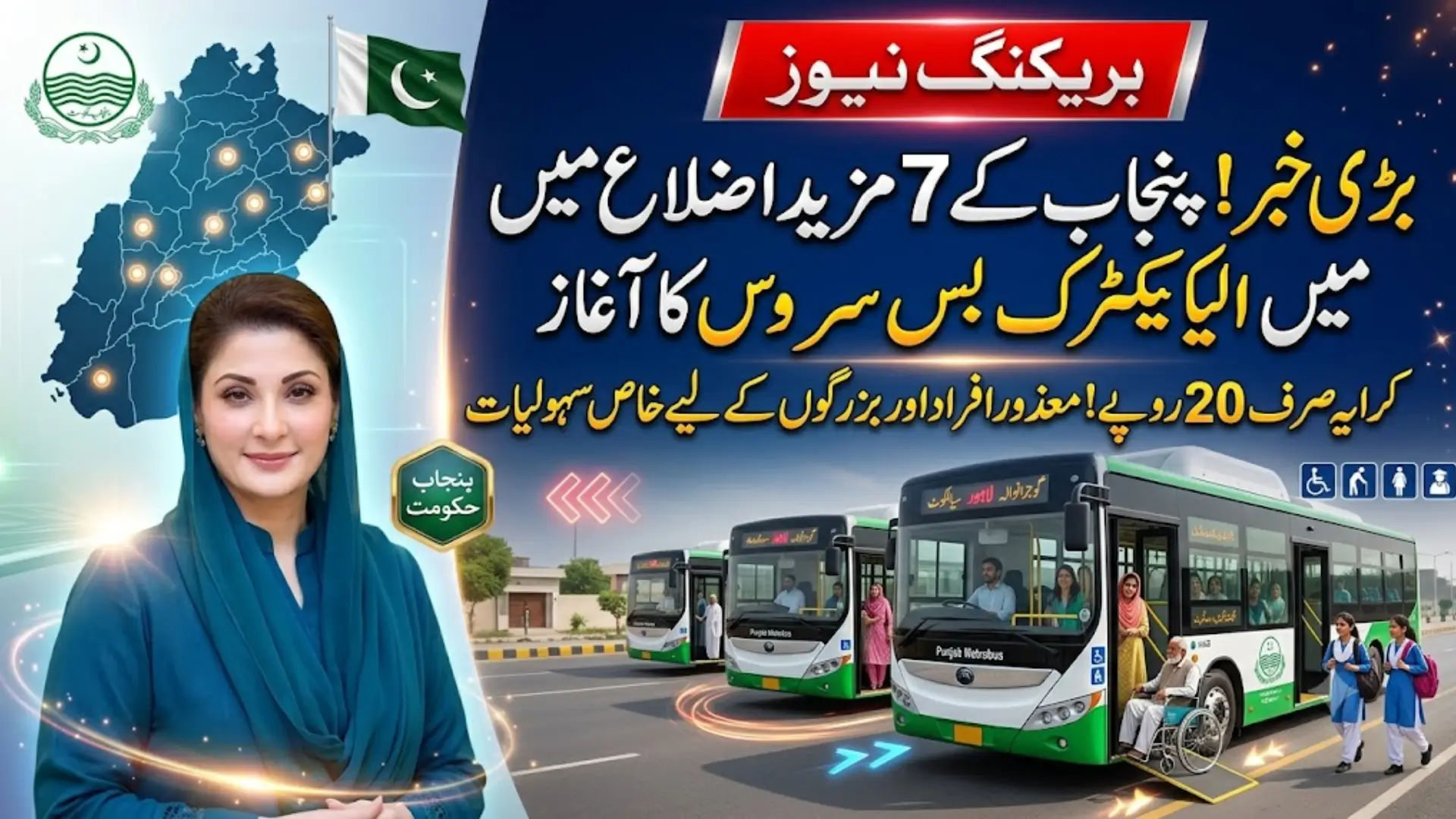
Punjab’s Electric Bus
Getting around Punjab’s smaller cities has usually meant relying on crowded vans or unpredictable rickshaws. That gap is closing fast. Chief Minister Maryam Nawaz Sharif has launched electric bus services in seven more districts, bringing a modern, affordable transport option to areas that never had it before.
What Just Launched
Seventy-seven electric buses have started operating across seven districts: Gujrat, Narowal, Nankana Sahib, Vehari, Lodhran, Sheikhupura, and Kasur. Residents in these areas now have access to the same kind of clean, modern public transport that was previously limited to Lahore and a few other major cities.
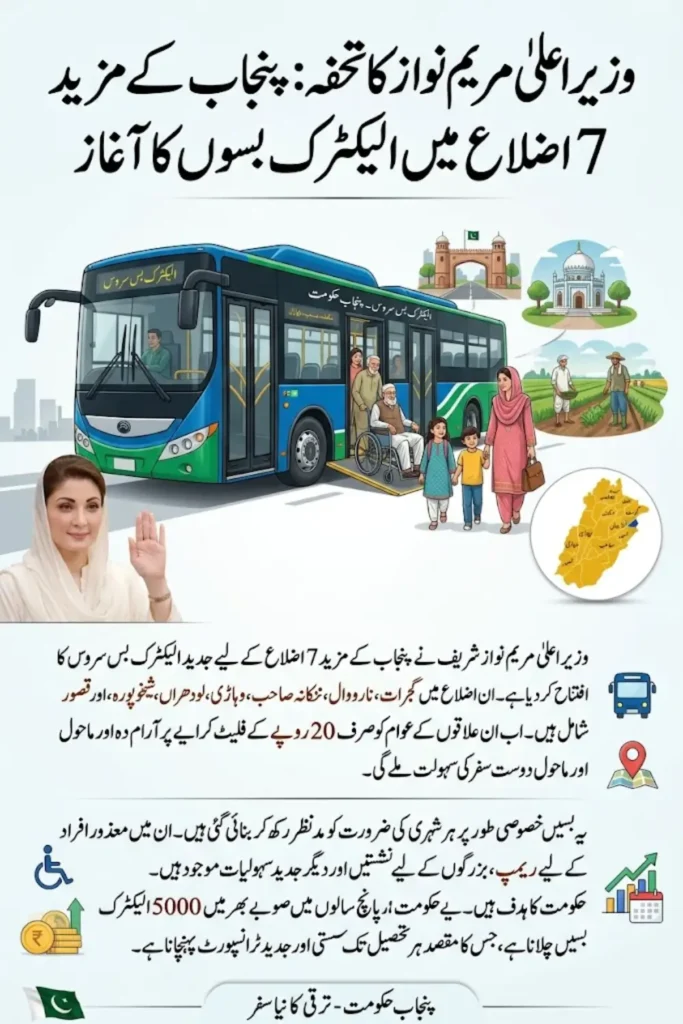
The fare has been fixed at a flat Rs. 20 per ride, regardless of distance within the route, making this a genuinely low-cost option for daily commuters rather than a premium service.
Designed With Accessibility in Mind
This rollout wasn’t just about adding more buses to the road. The fleet includes specific features aimed at passengers who are usually overlooked in standard transport planning:
- Wheelchair ramps for easier, safer boarding
- Dedicated seating for senior citizens
- Accessibility support for people with disabilities
Officials said the goal was to create a safe, comfortable, and environmentally friendly service that actually meets the mobility needs of everyone, not just commuters who can easily climb into a standard bus.
Also Read: Balochistan 2026 Electric Bike Scheme Apply Now for Students, Women & Government Employees
How This Connects to Punjab’s Larger E-Bus Plan
This wasn’t a standalone announcement. It’s the latest confirmed step in a much bigger electric transport programme the Punjab government has been rolling out district by district over recent weeks.
The Five-Year Target
The province has set a goal of deploying 5,000 electric buses within five years, a scale officials describe as the largest public transport system in Pakistan’s history. The plan specifically aims to move beyond big cities and reach smaller towns, eventually extending down to the tehsil level.
What Led Up to This Launch
In the weeks before this announcement, the government had already:
- Digitally inaugurated e-bus services in Layyah, Okara, Sialkot, Chiniot, and Murree
- Confirmed that 112 additional buses had arrived in Gujranwala, Gujrat, Sheikhupura, Multan, Murree, Vehari, Kasur, Lodhran, Nankana Sahib, and Narowal, with operations set to begin from July 25
- Announced that another 488 electric buses were on their way from a Chinese port for further distribution across Punjab
By the time this 7-district launch happened, the buses involve had clearly been arriving and being prepare for weeks rather than appearing overnight.
The Fleet So Far
More than 500 electric buses are now operational across roughly two dozen districts province-wide, with weekly ridership on the network reportedly crossing 300,000 passengers and still growing. The government has set a target of 1,100 buses running by the end of August 2026, with the full first phase of 1,500 buses expected to be complete within the current fiscal year.
Also Read: Prime Minister Electric Bike Scheme 2026: Eligibility, Benefits and How to Apply
Why This Expansion Matters Beyond These 7 Districts
It Breaks the Pattern of City-Only Investment
Major infrastructure upgrades in Pakistan have historically concentrated in provincial capitals and a handful of big cities. Bringing electric buses to places like Nankana Sahib and Lodhran, not just Lahore or Multan, signals a real shift toward spreading development more evenly across the province.
Punjab Is Now Manufacturing These Buses Locally
Rather than depending entirely on imports, Punjab has also established a domestic electric bus manufacturing industry. This matters for the long run, since local production makes it easier to sustain and grow the fleet without relying only on shipments from abroad.
Every District Gets a Minimum Fleet
The Chief Minister has directed that every district receive at least 15 electric buses, with additional buses sent wherever a district’s fleet falls short. This kind of baseline standard helps ensure smaller districts aren’t permanently left out as the rollout continues.
What This Means for Commuters in These Districts
If you live in Gujrat, Narowal, Nankana Sahib, Vehari, Lodhran, Sheikhupura, or Kasur, here’s what changes for you:
- A flat Rs. 20 fare, no matter how far you’re traveling on the route
- A safer, air-conditioned alternative to older van and rickshaw transport
- Accessibility support if you’re a senior citizen, living with a disability, or traveling with someone who needs help boarding
- A reasonable chance of more buses arriving in your district over time, given the government’s minimum fleet policy and continued bus shipments
Also Read: Jhelum Electric Bus Service 2026 Routes, Fare & Timings Guide
What to Expect Next
Given how quickly this rollout has been moving, more districts are likely to see similar launches in the coming weeks as new buses arrive and get deploy. Areas in South Punjab and smaller tehsils that haven’t been cover yet are the natural next step, in line with the government’s stated goal of reaching every town and village in the province.
Also Read: Punjab E-Bike Scheme 2026: Free & Interest-Free Electric Bikes for Students
Conclusion
The launch of electric buses in Gujrat, Narowal, Nankana Sahib, Vehari, Lodhran, Sheikhupura, and Kasur extends Punjab’s clean transport network well past its major cities, offering a genuinely affordable Rs. 20 fare with wheelchair ramps and senior-friendly design. With over 500 buses already running province-wide and a firm target of 5,000 within five years, this looks like one confirmed milestone in a fast-moving, district-by-district expansion rather than an isolated announcement.
Also Read: Balochistan 2026 Electric Bike Scheme Apply Now for Students, Women & Government Employees
FAQs
Which districts received electric buses in this launch?
Gujrat, Narowal, Nankana Sahib, Vehari, Lodhran, Sheikhupura, and Kasur, with 77 electric buses deployed across them.
How much does it cost to ride Punjab’s electric buses?
A flat Rs. 20 per ride, regardless of the distance traveled on the route.
Are these buses accessible for people with disabilities?
Yes, the fleet includes wheelchair ramps and dedicated facilities for senior citizens and people with disabilities.
Is this part of a bigger plan, or a one-time launch?
It’s part of a five-year target to deploy 5,000 electric buses across Punjab, with over 500 already operational across around two dozen districts.
Will more districts get electric buses soon?
Likely yes. New districts have been added every few weeks as additional buses arrive, with the government aiming to eventually reach every town and village in Punjab.
Are these electric buses imported or made in Pakistan?
Both. Punjab has set up a domestic electric bus manufacturing industry while also continuing to import additional buses to speed up the fleet expansion.