Petrol Price Hiked Again – Rs. 335.18/Litre for 25 July 2026
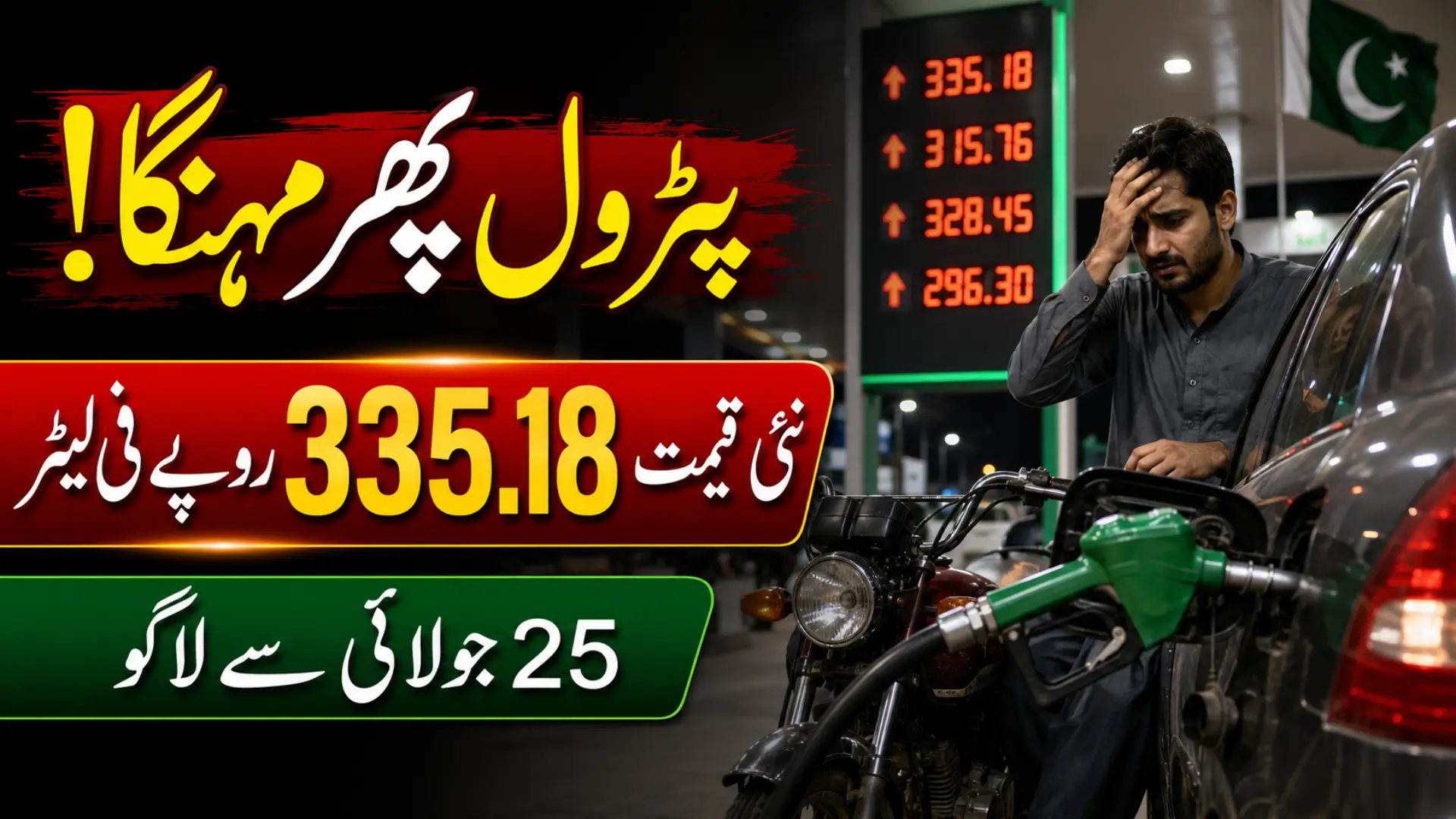
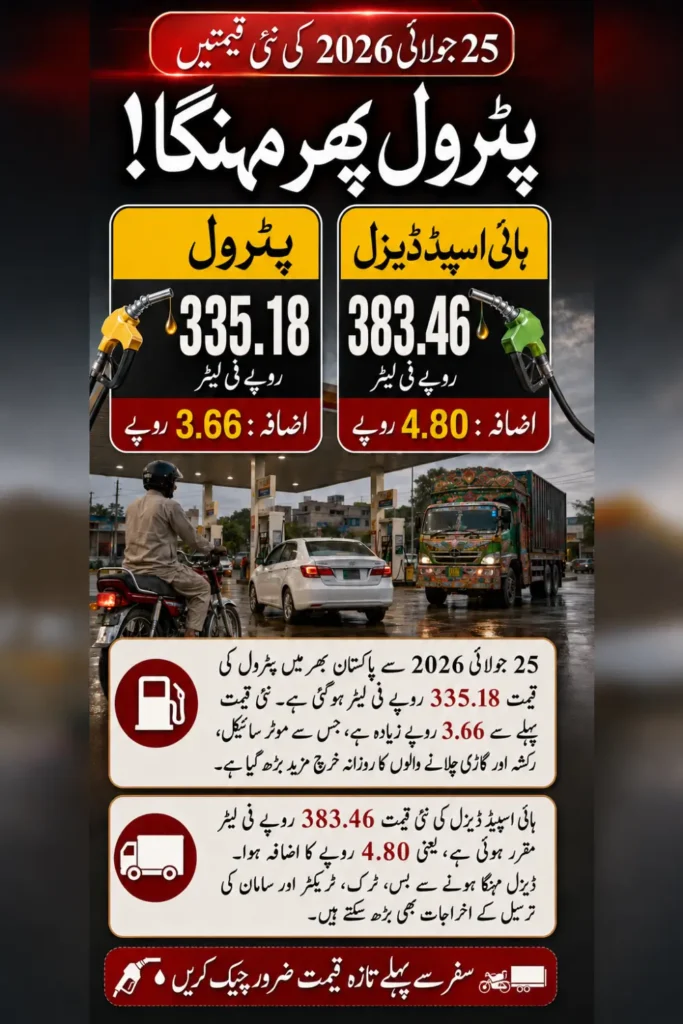
The petrol price in Pakistan has increased again, reaching Rs. 335.18 per litre from 25 July 2026. The new rate is Rs. 3.66 higher than the previous price of Rs. 331.52 per litre.
High-speed diesel has also become more expensive. Its price has risen by Rs. 4.80, taking the new rate to Rs. 383.46 per litre. The revised prices apply across Pakistan from 25 July and are already displayed at fuel stations. Shell Pakistan’s price board confirms both updated rates.
Petrol and Diesel Prices for 25 July 2026
The latest revision affects the two fuels most widely used by motorists, transporters and commercial vehicle operators. Petrol is mainly consumed by motorcycles, cars and rickshaws, while high-speed diesel powers buses, trucks, tractors and other heavy vehicles.
| Fuel type | Previous price | New price | Increase |
|---|---|---|---|
| Petrol | Rs. 331.52/litre | Rs. 335.18/litre | Rs. 3.66 |
| High-speed diesel | Rs. 378.66/litre | Rs. 383.46/litre | Rs. 4.80 |
These are the notified base rates. A small difference may sometimes appear on a station’s display due to rounding, but customers should not be charged above the approved price without a valid reason.
How Much Has Petrol Increased?
Petrol has gone up from Rs. 331.52 to Rs. 335.18 per litre. This is an increase of Rs. 3.66 in a single revision.
The increase may look small when calculated for one litre, but its effect becomes clearer when filling a complete tank:
- A 10-litre motorcycle refill now costs Rs. 3,351.80, which is Rs. 36.60 more.
- A 30-litre car refill costs Rs. 10,055.40, adding Rs. 109.80.
- A 40-litre refill costs Rs. 13,407.20, which is Rs. 146.40 more.
- A 50-litre refill costs Rs. 16,759, adding Rs. 183 to the bill.
The extra expense becomes greater for people who travel daily or refill several times during the month.
Diesel Price Reaches Rs. 383.46 Per Litre
High-speed diesel has increased from Rs. 378.66 to Rs. 383.46 per litre, a rise of Rs. 4.80. The diesel increase is larger than the petrol hike in both rupee and percentage terms.
Diesel prices matter beyond private vehicle owners. Trucks carry food, vegetables, construction materials and other goods between cities. Buses, farming machinery and many generators also run on diesel. A higher rate can therefore raise operating expenses for transporters, farmers and businesses.
This does not mean every product or bus fare will increase immediately. Any change depends on fuel consumption, travel distance, competition and the decisions taken by transporters or local authorities.
Why Are Fuel Prices Changing So Frequently?
Pakistan has been adjusting petroleum prices more frequently because international oil markets remain volatile. Changes in global crude oil and refined-product rates can affect the cost paid by a country that depends heavily on imported fuel.
The rupee-dollar exchange rate also plays a role. Oil purchases are generally settled in US dollars, so a weaker rupee can make imported petroleum more expensive even when the international price remains unchanged.
Other parts of the final retail price may include:
- The cost of importing or producing fuel
- Freight and distribution expenses
- Petroleum levy and other government charges
- Dealer and oil marketing company margins
- Exchange-rate adjustments
Petroleum Minister Ali Pervaiz Malik said that daily adjustments were being carried out because of the prevailing market situation. Fuel dealers were also informed that the daily pricing arrangement was being tested for 15 days, according to the 25 July price report.
Fifth Consecutive Increase Adds Pressure on Consumers
The 25 July revision was reported as the fifth consecutive increase in petroleum prices. Petrol had already reached Rs. 331.52 per litre on 24 July, while diesel stood at Rs. 378.66. The previous rates are recorded in Pakistan State Oil’s fuel-price archive.
Compared with the rates effective from 18 July, petrol is now Rs. 19.03 per litre more expensive. High-speed diesel has increased by Rs. 29.11 per litre during the same period.
Repeated increases make monthly budgeting difficult because consumers cannot rely on a fixed fuel cost. Delivery riders, ride-hailing drivers, sales workers and people travelling long distances for work are likely to feel the change most directly.
How the New Petrol Price Affects Household Budgets
A motorcyclist using one litre of petrol each working day will now spend around Rs. 7,374 over 22 working days. This calculation only covers fuel and does not include maintenance, parking or other travel expenses.
For a car consuming 40 litres a week, the weekly fuel bill is now about Rs. 13,407. At the previous rate, the same amount cost Rs. 13,260.80. The difference is Rs. 146.40 per week, or roughly Rs. 586 over four weeks if fuel use remains the same.
Actual spending will depend on the vehicle’s fuel average, traffic conditions, route and driving habits.
Also Read: Petrol Price in Pakistan Today – Latest Rates & Updates 2026
Practical Ways to Reduce Fuel Consumption
Drivers cannot control the notified petrol rate, but they can avoid unnecessary fuel use. Regular vehicle maintenance and smoother driving often produce better results than risky fuel-saving tricks.
Try these practical measures:
- Maintain the tyre pressure recommended by the vehicle manufacturer.
- Avoid sudden acceleration and hard braking.
- Switch off the engine during long, safe waiting periods.
- Combine several errands into one planned trip.
- Remove unnecessary weight from the vehicle.
- Service the engine and replace dirty air filters on time.
- Compare routes before travelling to avoid heavy traffic.
- Record litres purchased and kilometres travelled to check fuel average.
Always buy fuel from a reliable station and confirm that the pump display starts from zero. Ask for a receipt if the quantity or amount appears incorrect.
Also Read: Petrol Price in Pakistan Today – Latest Per-Liter Rates 2026
Where to Check the Latest Petrol Price
As prices are being revised frequently, old social media posts can quickly become misleading. Consumers should check the effective date before sharing or relying on any price update.
The safest options include official government notifications and current price boards published by established oil marketing companies. The rate shown on 25 July may change again if another notification is issued, so readers should verify the latest price before planning a large fuel purchase.
Also Read: Gold Price in Pakistan Today – 22 July 2026 (24K & 22K Rates)
Conclusion
Petrol now costs Rs. 335.18 per litre, while high-speed diesel is priced at Rs. 383.46 per litre from 25 July 2026. With fuel rates changing frequently, motorists should check the effective date of each update and plan travel according to their actual monthly consumption.
Also Read: Gold Price in Pakistan Today 24 July 2026 – Latest Gold Rate
Frequently Asked Questions
What is the petrol price in Pakistan on 25 July 2026?
The petrol price is Rs. 335.18 per litre, effective from 25 July 2026.
How much did the petrol price increase?
Petrol increased by Rs. 3.66 per litre, rising from Rs. 331.52 to Rs. 335.18.
What is the diesel price in Pakistan today?
High-speed diesel costs Rs. 383.46 per litre from 25 July 2026.
How much did the diesel rate increase?
The high-speed diesel price increased by Rs. 4.80 per litre from its previous rate of Rs. 378.66.
Are the new fuel prices applicable across Pakistan?
Yes. The notified petrol and high-speed diesel rates apply across Pakistan from their stated effective date.
Can petrol prices change again soon?
Yes. Petroleum prices are currently being reviewed frequently, so another revision may occur if international market conditions, import costs or the exchange rate change.
Also Read: Gold Price in Pakistan Today – July 2026 Rates, Trends & Buying Tips