SBP’s New Rule: Housing Loans Must Now Be Approved Within 15 Days

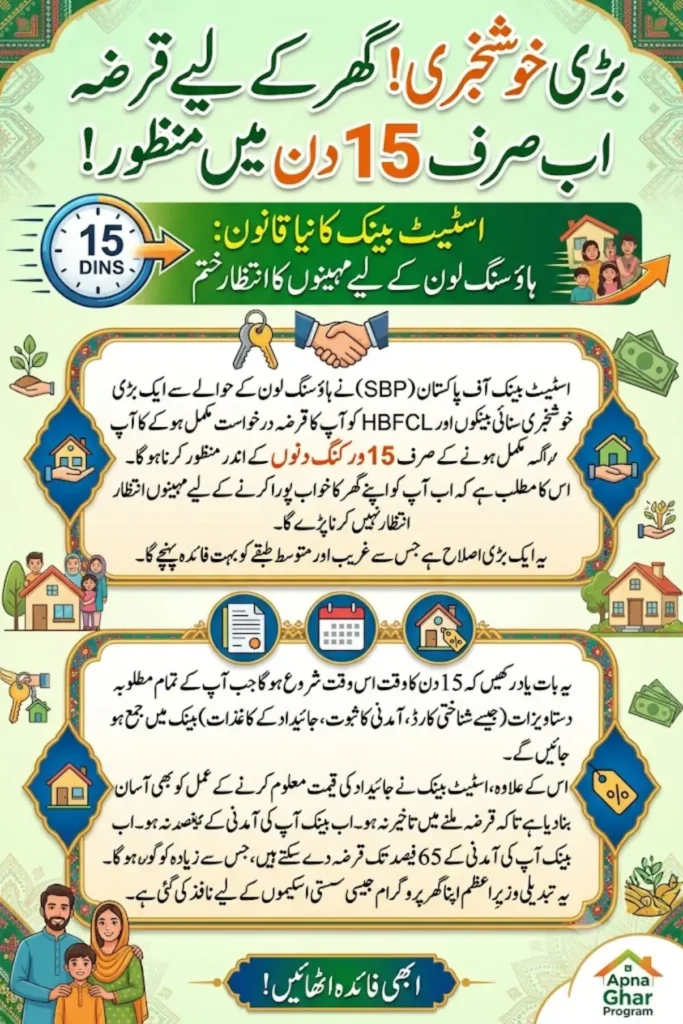
If you’ve ever applied for a housing loan in Pakistan, you know the waiting game all too well — weeks, sometimes months, of follow-up calls just to get a simple update on your application. That’s changing. The State Bank of Pakistan (SBP) has introduced a set of procedural reforms that require banks and the House Building Finance Company Limited (HBFCL) to complete credit approvals within just 15 working days once your application is complete. Here’s what this means for you, and how to make sure your application actually qualifies for this faster timeline.
What Exactly Did SBP Announce?
As part of the broader rollout of the Wazir-e-Azam Apna Ghar Program, SBP introduced procedural reforms specifically targeting how long banks and HBFCL can take to process a housing loan application. These reforms were developed alongside the scheme’s expansion, following consultations involving the private sector, the Ministry of Finance, and SBP itself.
The reform package includes three major changes:
1. A 15-Working-Day Approval Deadline
Once your application is complete — meaning all required documents have been submitted — banks and HBFCL are now required to finish the credit approval process within 15 working days.
2. Debt Burden Ratio Capped at 65%
Your Debt Burden Ratio (DBR) is the percentage of your income that goes toward paying off existing and new debt. SBP has capped this at 65% for housing finance applicants, which is meant to strengthen lending discipline while still keeping the door open for a wider range of applicants.
3. Simplified Property Valuation Procedures
Property valuation — the process banks use to confirm what a house, flat, or plot is actually worth before approving a loan against it — has been simplified to cut down on processing delays that used to slow applications down significantly.
Also Read: Apna Ghar, Mehfooz Ghar: Punjab’s New Home Safety Loan Scheme (2026 Guide)
Why This Matters for You
If you’ve been putting off applying for a housing scheme because of horror stories about long waits and unclear timelines, this reform directly addresses that concern. Here’s the practical difference it makes:
| Before This Reform | After the 15-Day Rule |
|---|---|
| No standard timeline — approvals could take weeks or months | Clear 15-working-day deadline once your file is complete |
| Debt Burden Ratio assessed inconsistently across banks | Capped uniformly at 65% |
| Property valuation often caused major delays | Simplified process aimed at speeding this up |
What “15 Working Days” Actually Means
This is an important detail a lot of people misunderstand: the 15-day clock starts only once your application is complete — not from the day you first walk into a branch.
That means the timeline can be affected by:
- How quickly you submit all required documents
- Whether your documents are correct and complete the first time
- How fast the bank can verify your income and property details
In other words, the fastest way to benefit from this rule is to prepare properly before you apply, so your file is marked “complete” as early as possible.
Also Read: Apna Ghar Mehfooz Ghar Scheme 2026: Get Rs 5 Lakh Loan for Home Repair
How to Make Sure Your Application Qualifies for the 15-Day Timeline
Have Your Documents Ready Before You Apply
Common documents banks typically ask for include:
- CNIC copies (yours and any co-applicant’s)
- Proof of income — salary slip, tax returns, or business income documents
- Property documents — sale agreement, ownership papers, or allotment letter
- Recent utility bill for address verification
- Passport-size photographs
Understand Your Debt Burden Ratio Before You Apply
Since DBR is now capped at 65%, it helps to roughly estimate your own ratio before applying:
Debt Burden Ratio = (Total Monthly Debt Payments ÷ Monthly Net Income) × 100
If your existing loan repayments — car loans, credit cards, personal loans — combined with your expected housing loan installment would push you above 65% of your income, your application may face delays or rejection. It’s worth doing this math honestly before you apply, so you’re not caught off guard.
Ask About the Property Valuation Process Upfront
Since valuation delays were a major bottleneck in the past, ask your bank directly what their current valuation process looks like and how long it typically takes under the new simplified procedure. This can help you plan realistically, even with the reform in place.
Also Read: Meezan Bank Apna Ghar Program 2026 Eligibility, Loan Limit and How to Apply
Which Housing Schemes Does This Apply To?
This reform was introduced alongside the Wazir-e-Azam Apna Ghar Program, but since it’s a procedural change at the SBP level covering banks and HBFCL, it’s reasonable to expect it applies broadly to housing finance processed under SBP’s affordable housing finance regime — including related schemes like Mera Ghar Mera Ashiana that operate through the same participating banks.
If you’re applying under any SBP-linked housing scheme, it’s worth directly asking your bank whether the 15-day approval rule applies to your specific application.
Also Read: Meezan Bank Mera Ghar Mera Ashiana Loan 2026: Rs. 2 Billion Disbursed Here’s What It Means for You
Frequently Asked Questions
Does the 15-day timeline start from the day I submit my first document?
No. It starts once your application file is considered complete — meaning all required documents have been submitted and accepted by the bank.
What happens if a bank doesn’t meet the 15-day deadline?
This is a procedural requirement set by SBP for participating banks and HBFCL. If you experience significant delays beyond this timeline, it’s worth raising the issue directly with your bank’s customer service or escalating through SBP’s complaint channels.
What is a Debt Burden Ratio, and why does it matter now?
It’s the percentage of your monthly income already committed to debt repayments. SBP has capped this at 65% for housing finance applicants, meaning if your ratio is too high, your application may not be approved regardless of how quickly the bank processes it.
Does this rule apply to all banks, or only specific ones?
The reform applies to banks and HBFCL participating in SBP’s affordable housing finance framework. Always confirm directly with your chosen institution whether this timeline applies to your application.
Will faster approval also mean faster loan disbursement?
Not necessarily. Approval and disbursement are two different stages. Approval confirms your loan is accepted; disbursement — especially for construction projects — is often released in phases tied to construction progress, which follows its own separate timeline.
Also Read: MCB Mera Ghar Housing Scheme 2026: How to Apply, Eligibility & Fast Approval Tips