Parasite Outbreak and Explosive Diarrhea: Symptoms, Causes, and What to Know
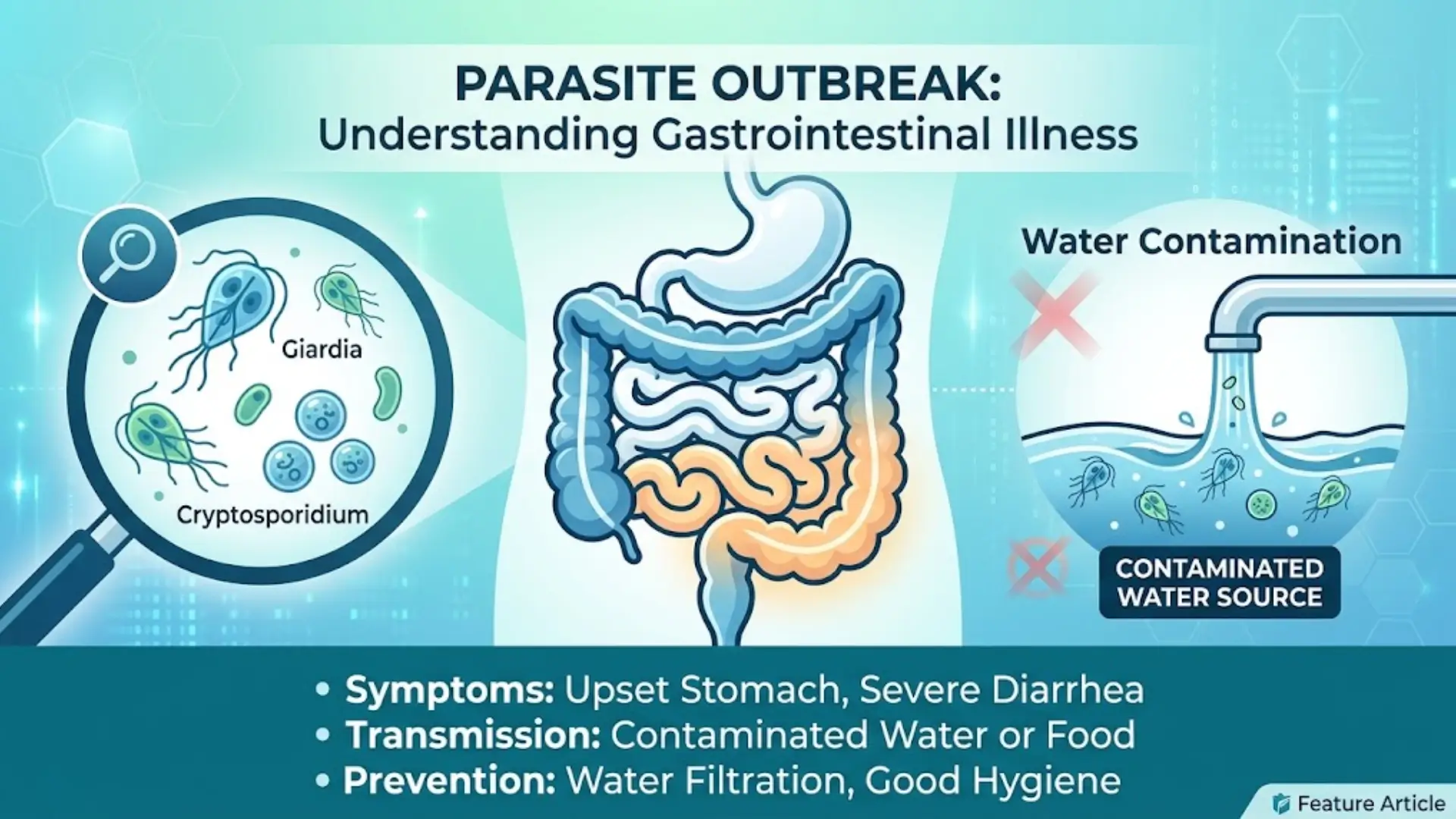
A parasite outbreak can cause clusters of gastrointestinal illness, particularly when contaminated water, food, surfaces, or person-to-person contact allows an intestinal parasite to spread. Explosive diarrhea can be one of the most noticeable symptoms, but diarrhea alone does not prove that a parasite is responsible. Viruses and bacteria can also cause sudden or severe diarrhea.
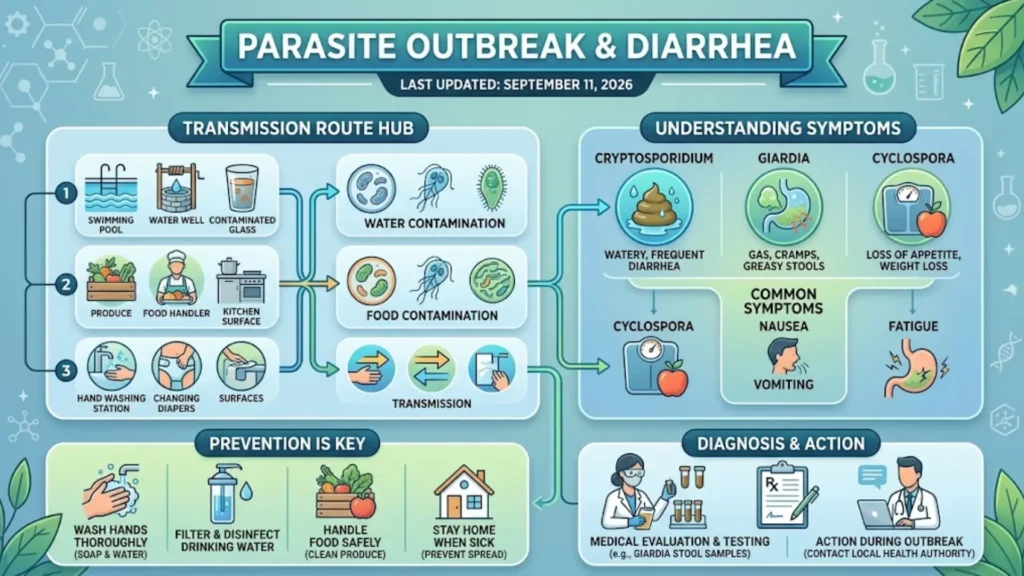
Among the parasites associated with diarrheal illness are Cryptosporidium, Giardia, and Cyclospora. Cryptosporidium commonly causes frequent, watery diarrhea, while Giardia can cause diarrhea along with gas, stomach cramps, nausea, and greasy or foul-smelling stools.
Understanding how these infections spread, what symptoms to watch for, and when medical care may be necessary can help people respond appropriately during a suspected parasite outbreak.
What Does “Parasite Outbreak and Explosive Diarrhea” Mean?
The phrase “parasite outbreak” generally refers to multiple people becoming infected with the same parasite through a shared source or transmission route.
An outbreak can occur when contaminated water, food, recreational water, or surfaces expose multiple people to a parasite. Some intestinal parasites can also spread directly between people when microscopic organisms from infected stool reach another person’s mouth.
“Explosive diarrhea” is a descriptive term rather than a specific medical diagnosis. It usually refers to sudden, forceful, or very frequent watery bowel movements.
It is important not to assume that explosive diarrhea automatically means someone has a parasite infection. A healthcare professional may need testing to determine the actual cause.
Which Parasites Can Cause Severe Diarrhea?
Several parasites can cause gastrointestinal illness.
Cryptosporidium
Cryptosporidium, often called Crypto, is a microscopic parasite that causes cryptosporidiosis. Its most common symptom is prolonged, frequent, watery diarrhea. Other symptoms can include stomach cramps, nausea, vomiting, fever, weight loss, and dehydration.
Symptoms typically begin 2 to 10 days after infection, with an average incubation period of about seven days. In people with healthy immune systems, symptoms commonly resolve within two to three weeks, although the illness can last longer.
Crypto can spread through contaminated water, food, surfaces, and hands. Recreational water, including swimming pools and lakes, can be an important transmission route.
Giardia
Giardia duodenalis is another important cause of parasitic diarrhea.
Giardia infections can cause:
- Diarrhea
- Gas and bloating
- Stomach cramps
- Nausea
- Fatigue
- Greasy or foul-smelling stools
- Dehydration
Symptoms commonly begin one to two weeks after infection and may last two to six weeks. Some people have no symptoms at all, while others can experience recurring or prolonged gastrointestinal problems.
Cyclospora
Cyclospora cayetanensis can also cause prolonged or recurring diarrhea. According to CDC outbreak guidance, symptoms may include diarrhea, nausea, loss of appetite, weight loss, abdominal cramps, gas, fatigue, and a low-grade fever.
Because different parasites can cause similar symptoms, laboratory testing can be important when a healthcare provider suspects a parasitic infection.
What Does Parasite-Related Diarrhea Look Like?
There is no single appearance that confirms a parasite infection.
Depending on the organism, diarrhea may be watery, frequent, prolonged, or recurring. Giardia, for example, can cause greasy stools that may float, while Cryptosporidium commonly produces watery diarrhea.
Other symptoms can include:
- Abdominal cramps
- Gas
- Nausea
- Vomiting
- Fatigue
- Fever
- Weight loss
- Dehydration
The combination and severity of symptoms vary from one infection to another.
This is why it is not reliable to diagnose a parasite simply by looking at stool or by judging how forceful diarrhea is.
How Do Parasite Outbreaks Spread?
Many intestinal parasites spread through the fecal-oral route. This means microscopic material from infected stool reaches another person’s mouth.
Transmission can happen through:
Contaminated Water
Drinking untreated water or accidentally swallowing contaminated recreational water can transmit parasites such as Giardia and Cryptosporidium.
Contaminated Food
Food can become contaminated during growing, processing, preparation, or handling. CDC identifies Giardia, Cryptosporidium, and Cyclospora among parasites that can cause foodborne illness.
Person-to-Person Contact
Parasites can spread when infected stool contaminates hands, surfaces, objects, or food.
This is particularly relevant in environments where people have close contact, including childcare settings. Giardia outbreaks have been associated with person-to-person transmission as well as contaminated water.
Swimming and Recreational Water
Cryptosporidium can spread when people swallow contaminated recreational water. Because the parasite can survive in the environment and spread efficiently through contaminated water, swimming pools and other recreational water settings can contribute to outbreaks.
Is Explosive Diarrhea Always Caused by a Parasite?
No.
Sudden or severe diarrhea has many possible causes. Viral and bacterial infections are common causes, while parasites are another possibility.
For that reason, symptoms alone cannot reliably identify the organism responsible.
A suspected outbreak may require public-health investigation and laboratory testing to determine whether a parasite, bacterium, virus, or another cause is responsible. CDC guidance for foodborne outbreaks includes specific laboratory methods for confirming parasites such as Cryptosporidium, Giardia, and Cyclospora.
When Should You Suspect a Parasite Infection?
A parasite infection may be worth discussing with a healthcare professional when diarrhea is persistent, recurring, or associated with a known exposure.
Potential clues include:
- Several people becoming sick after sharing the same water or food source
- Recent exposure to untreated water
- Swimming in potentially contaminated recreational water
- Close contact with someone diagnosed with a parasitic infection
- Recent international travel
- Persistent or recurring diarrhea
- Greasy or unusually foul-smelling stools
- Unexplained weight loss
- Significant fatigue or dehydration
These signs do not establish a diagnosis, but they can help a healthcare provider determine whether testing is appropriate.
How Are Parasite Infections Diagnosed?
Diagnosis depends on the suspected organism.
For Giardia, healthcare providers may request one or more stool samples that are analyzed by a laboratory. Multiple samples may sometimes be necessary because Giardia is not necessarily present in every bowel movement.
Testing can help distinguish parasitic diarrhea from other gastrointestinal infections.
This distinction matters because treatment depends on the underlying cause. A person should not assume that an over-the-counter diarrhea medicine or an antiparasitic medication is appropriate without understanding what is causing the illness.
What Should You Do If You Have Severe Diarrhea?
The immediate concern with frequent diarrhea is fluid and electrolyte loss.
People with diarrhea should focus on maintaining adequate hydration. Water and appropriate fluids can help replace losses, while medical advice may be necessary when symptoms are severe or persistent.
The risk of complications can be greater for young children, older adults, and people with weakened immune systems.
Cryptosporidium can become particularly serious in people with weakened immune systems, potentially causing prolonged illness and problems absorbing nutrients.
Seek medical attention promptly if diarrhea is severe, persistent, accompanied by concerning symptoms, or causing signs of significant dehydration.
How Can You Prevent a Parasite Outbreak?
Good hygiene and safe water practices are among the most important prevention measures.
Wash Your Hands
Wash your hands thoroughly with soap and water after using the bathroom, changing diapers, caring for someone with diarrhea, and before preparing or eating food.
Avoid Swallowing Recreational Water
Do not intentionally swallow water from swimming pools, lakes, rivers, splash pads, or other recreational sources.
Use Safe Drinking Water
Avoid drinking untreated water from lakes, rivers, springs, or questionable water supplies. CDC recommends appropriate treatment of potentially contaminated water before drinking or using it for food preparation.
Handle Food Safely
Wash produce appropriately, maintain good kitchen hygiene, and prevent contaminated hands or surfaces from coming into contact with food.
Stay Home When Sick
If you have diarrhea caused by a contagious infection, avoiding situations where you could contaminate food, water, or shared surfaces can help reduce transmission.
What Should You Do During a Suspected Outbreak?
If several people in a household, workplace, school, childcare facility, or community develop similar gastrointestinal symptoms, consider contacting a healthcare professional or local public-health authority.
Record useful information such as:
- When symptoms started
- What symptoms occurred
- Recent meals
- Recent travel
- Swimming or recreational-water exposure
- Drinking-water sources
- Other people who became sick
- Any known contact with an infected person
This information can help investigators identify possible common exposures.
Public-health investigations may use laboratory testing and exposure histories to determine the cause of an outbreak. CDC has documented Giardia outbreaks associated with waterborne exposure, person-to-person transmission, and contaminated food.
How Long Can Parasite Diarrhea Last?
Duration depends heavily on the parasite and the individual.
Cryptosporidium symptoms commonly resolve within two to three weeks in people with healthy immune systems, although symptoms can last longer.
Giardia symptoms typically last two to six weeks, although some people experience longer-term or recurring symptoms.
Persistent diarrhea should not simply be ignored, especially when it is accompanied by dehydration, weight loss, significant weakness, or other concerning symptoms.
Frequently Asked Questions
What parasite causes explosive diarrhea?
Several parasites can cause significant diarrhea, including Cryptosporidium, Giardia, and Cyclospora. Cryptosporidium is particularly associated with frequent, watery diarrhea. However, explosive diarrhea can also result from non-parasitic infections.
Can a parasite outbreak cause watery diarrhea?
Yes. Cryptosporidium commonly causes watery diarrhea, while Giardia and Cyclospora can also cause diarrheal illness.
How do parasites spread during an outbreak?
Parasites can spread through contaminated water, food, hands, surfaces, and person-to-person contact. Some outbreaks are associated with recreational water exposure.
How is a parasite infection tested?
Testing depends on the suspected parasite. For Giardia, healthcare providers may request stool samples for laboratory testing, sometimes using several samples collected on different days.
Can you get parasites from swimming pools?
Yes. Cryptosporidium can spread when people swallow contaminated recreational water, including water from swimming pools and other swimming areas.
How long does parasite diarrhea last?
It varies. Cryptosporidium commonly causes symptoms for one to several weeks, while Giardia symptoms often last two to six weeks. Some infections can cause recurring or longer-term symptoms.
Is explosive diarrhea an emergency?
Not necessarily, but severe or persistent diarrhea can lead to dehydration and other complications. Seek medical care when symptoms are severe, prolonged, or accompanied by signs of significant dehydration or other concerning symptoms.
Conclusion
A parasite outbreak can cause significant gastrointestinal illness, and explosive diarrhea may occur with infections such as Cryptosporidium, Giardia, or Cyclospora. However, diarrhea alone cannot identify a parasite because many viruses and bacteria can produce similar symptoms.
Safe drinking water, careful hand hygiene, food safety, and avoiding contaminated recreational water are important ways to reduce transmission. If diarrhea persists, becomes severe, or follows a known outbreak or exposure, medical evaluation and appropriate laboratory testing can help identify the cause and guide treatment.