Why Petrol Fell But Diesel Rose – Pakistan Fuel Prices Explained
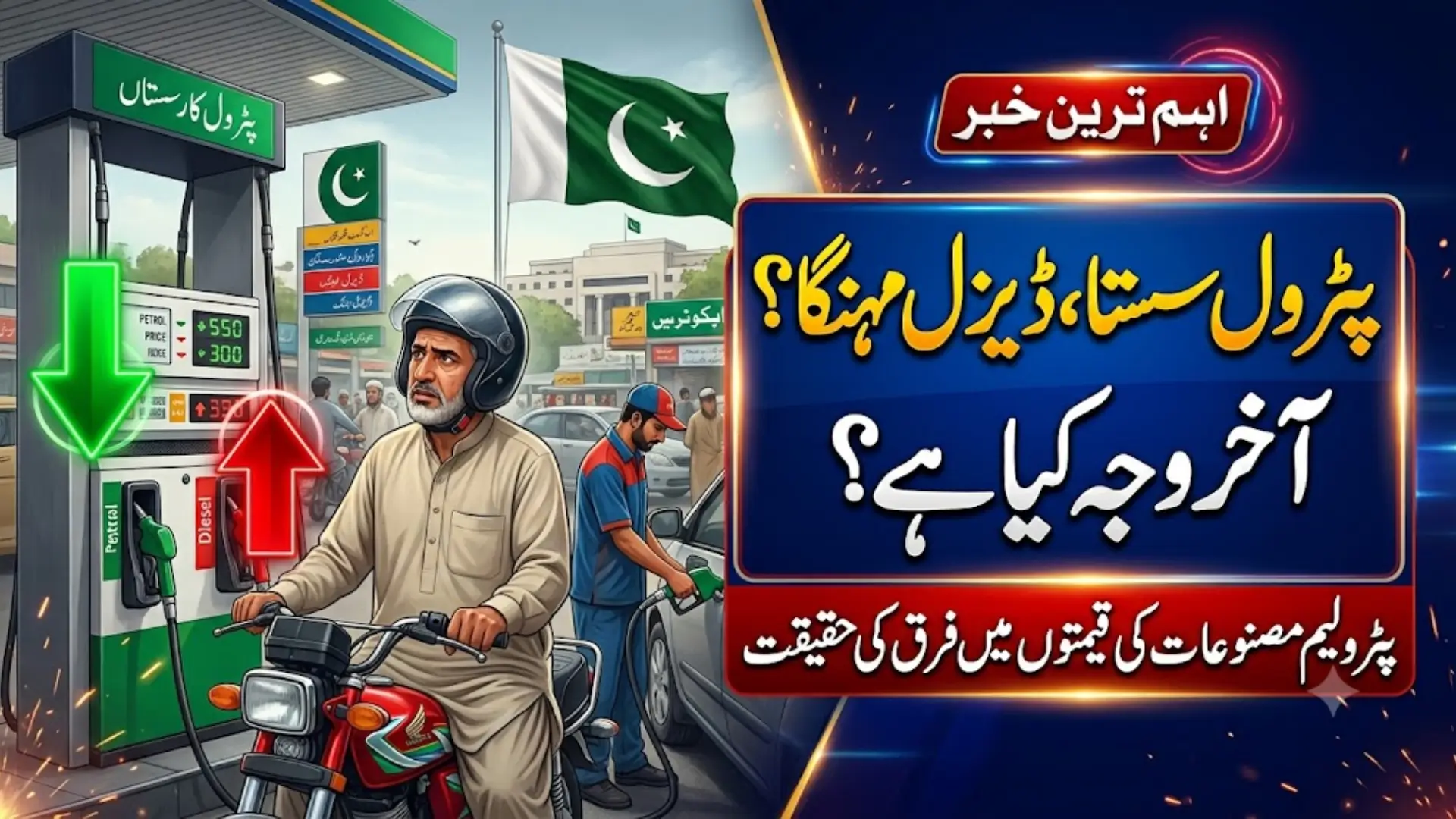
Petrol got cheaper today. Diesel got more expensive. Same country, same day, same government notification, opposite direction. Here’s what actually happened, and why these two fuels didn’t move together this time.
Today’s Prices at a Glance
The Oil and Gas Regulatory Authority (OGRA) revised fuel prices effective July 28, 2026, under Pakistan’s daily pricing mechanism.
| Fuel | Previous Price | New Price | Change |
|---|---|---|---|
| Petrol | Rs. 335.18/liter | Rs. 334.18/liter | Down Re1 |
| High-Speed Diesel | Rs. 383.46/liter | Rs. 386.83/liter | Up Rs. 3.37 |
Both changes came from the same notification, issued by the Ministry of Energy’s Petroleum Division based on OGRA’s recommendation. So why the split?

The Real Reason: Global Oil Prices Dropped, But Not Evenly
The short answer is that petrol and diesel are priced separately in the international market, and they didn’t respond the same way to recent global events.
What Happened in the Middle East
Over the weekend, the United States and Iran paused hostilities that had been threatening shipping routes through the Strait of Hormuz, a critical corridor for global oil transport. That pause eased fears of supply disruption, and oil markets reacted immediately.
Brent crude futures fell by $5.70, or nearly 6 percent, dropping to $91.08 per barrel. US West Texas Intermediate crude fell almost as sharply, down $4.80 to $84.51 per barrel. This was a genuinely large one-day move in global oil pricing.
Why This Helped Petrol More Than Diesel
Even though both fuels are refined from crude oil, they trade as separate products internationally, each with its own supply and demand pressures. Diesel demand globally has stayed strong, driven by industrial use, shipping, and power generation in several countries, which kept diesel’s international reference price firmer even as crude oil itself became cheaper. Petrol, used mostly for passenger vehicles, tracked the crude oil drop more closely.
This is why you’re seeing a small petrol relief and a real diesel increase from the exact same day’s oil market movement.
Also Read: PM Apna Ghar Programme – Why 13,000 Applications Got Rejected
A Bigger Story: This Follows Five Days of Increases
This isn’t happening in isolation. Just before this cut, Pakistan saw five consecutive daily price increases, pushing petrol up by Rs. 24 per liter and diesel up by more than Rs. 60 per liter over the course of a single week.
The government then paused pricing entirely for July 26 and 27, since Platts, the reference agency for international oil prices, doesn’t publish rates over the weekend. Today’s revision is the first update since that pause, reflecting everything that changed in the market during those few days, including the sudden Iran ceasefire news.
Why Diesel Matters More Than the Number Suggests
A Rs. 3.37 increase might look small next to a Rs. 60 jump from the week before, but diesel’s impact on the wider economy is disproportionate to its per-liter price change.
Diesel powers:
- Heavy trucks and freight transport
- Public buses and coaches
- Agricultural machinery and tube wells
- Much of Pakistan’s power generation
Because diesel touches transport and farming so directly, even a modest increase tends to show up a few weeks later in higher prices for food, goods, and public transport fares. Petrol mainly affects private vehicle owners and motorcyclists, whose spending doesn’t ripple through the broader economy the same way.
What This Means If You’re Filling Up Today
- Car and bike owners get a small, genuine saving, roughly Rs. 50 on a 50-liter tank compared to yesterday
- Transporters, farmers, and businesses using diesel face a real cost increase that will likely need to be absorbed or passed on
- Everyone should expect diesel-driven price effects on transport and food to show up gradually over the coming weeks, not immediately
Also Read: Rehmat Card Status Check 2026 – Track Your Application Online
How Pakistan’s Daily Pricing System Plays Into This
Pakistan moved from a fortnightly to a daily pricing mechanism earlier this year, specifically so domestic prices could track global oil market swings like this one more closely. Under the old system, a sudden 6 percent crude oil drop might have taken up to two weeks to show up at the pump. Under daily pricing, it showed up the very next trading day.
OGRA calculates these daily prices using a seven-working-day average of international reference rates, combined with the current exchange rate, which is why prices can still move even without dramatic single-day news, but move faster and more visibly when something like the Iran ceasefire happens.
What to Watch Next
If the ceasefire between the US and Iran holds, international oil prices may continue easing, which could bring further petrol relief in the coming days. If diesel demand stays strong internationally despite falling crude prices, don’t expect diesel to drop at the same pace, even if petrol keeps falling.
Also Read: CM Punjab Rozgar Scheme 2026: How to Get a Business Loan Up to Rs 1 Crore
Conclusion
Petrol fell and diesel rose on the same day because the two fuels respond to different pressures in the international market, even when both are refined from the same crude oil. A major Iran-US ceasefire pushed crude prices down sharply, but strong global diesel demand kept that fuel’s reference price firm. For everyday drivers, the petrol cut is a small win. For the broader economy, the diesel increase is the number that actually matters more.
Also Read: CM Punjab Solar Scheme 2026: Eligibility & Status Check
FAQs
Why did diesel price increase while petrol decreased on the same day?
Petrol and diesel are priced separately in international markets. Global crude oil prices fell sharply after the US-Iran ceasefire, which benefited petrol more, while strong global diesel demand kept diesel’s reference price higher.
What is today’s petrol and diesel price in Pakistan?
As of July 28, 2026, petrol is Rs. 334.18 per liter and high-speed diesel is Rs. 386.83 per liter.
Why does diesel price matter more than petrol for the economy?
Diesel powers freight transport, public buses, farm machinery, and power generation, so price changes affect food, transport fares, and goods prices more broadly than petrol does.
What caused the sudden drop in global oil prices?
The United States and Iran paused hostilities over the weekend, easing concerns about oil shipping disruptions through the Strait of Hormuz, which caused Brent crude to fall nearly 6 percent.
How often do fuel prices change in Pakistan now?
Pakistan uses a daily pricing mechanism, allowing OGRA to adjust petrol and diesel prices every 24 hours based on a seven-day average of international rates and the exchange rate.
Will petrol prices keep falling?
If the US-Iran ceasefire holds and global oil prices continue easing, further petrol relief is possible, though diesel may not fall at the same pace due to steady global demand.
Also Read: Housing Loan Scheme 2026: How First-Time Buyers in Pakistan Can Get a Home Loan