Petrol Price in Pakistan Today – Latest Rates & Updates 2026
Fuel prices affect almost every household budget in Pakistan, from your daily commute to the cost of groceries delivered to your local market. If you’re trying to plan your monthly expenses or just want to know exactly what you’ll pay at the pump, here are the latest confirmed petrol and diesel rates in Pakistan, along with a simple explanation of how these prices are decided and what affects them.
Today’s Petrol and Diesel Prices in Pakistan
| Fuel Type | Price Per Liter |
|---|---|
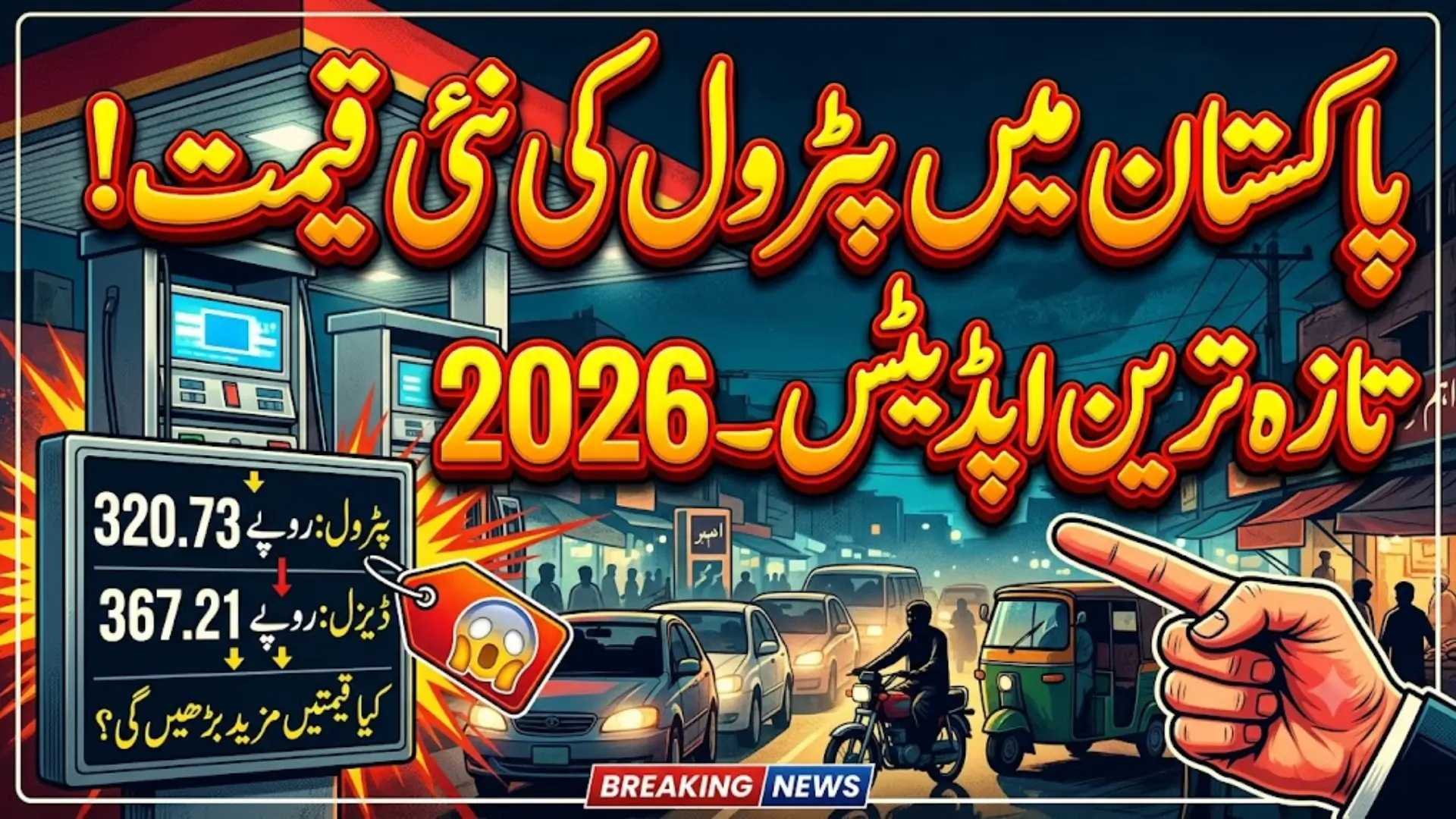
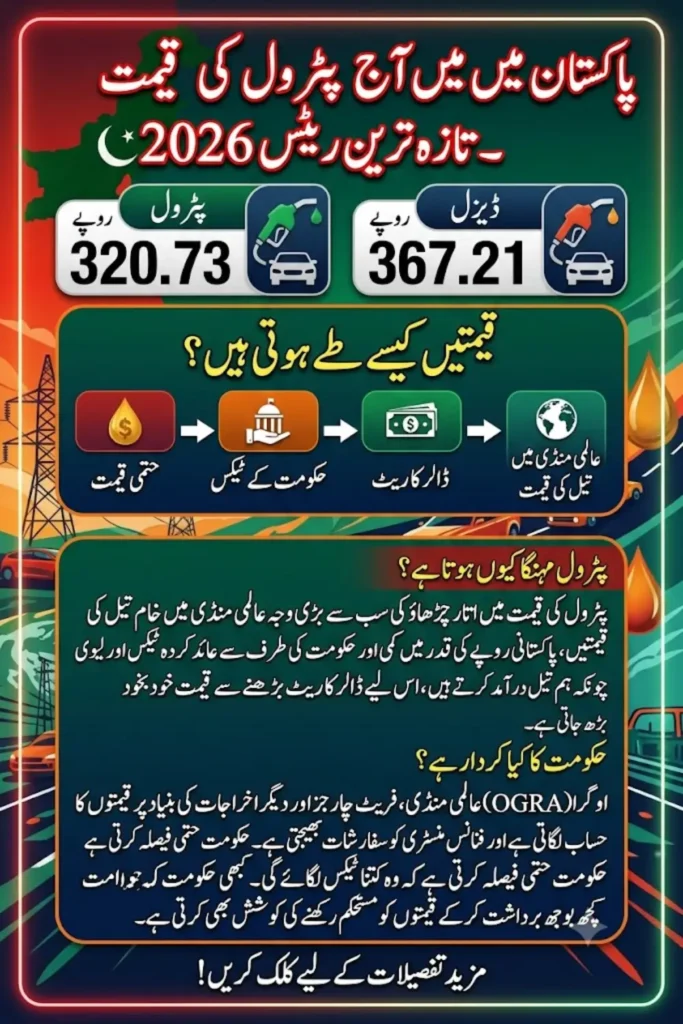
| Petrol (Motor Spirit) | Rs. 320.73 |
| High-Speed Diesel (HSD) | Rs. 367.21 |
These rates apply nationwide and are set by the Government of Pakistan based on the official notification issued by the Oil and Gas Regulatory Authority (OGRA) and the Ministry of Finance.
Also Read: NAPHDA Is Being Shut Down in 2026: Where Should You Apply for Housing Now?
How Petrol Prices Are Determined in Pakistan
A lot of people assume fuel prices are set arbitrarily, but there’s actually a structured process behind every price revision.
The Role of OGRA
The Oil and Gas Regulatory Authority (OGRA) calculates recommended fuel prices based on:
- International crude oil prices
- The exchange rate between the Pakistani Rupee and the US Dollar
- Freight and import costs
- Applicable government taxes and levies
The Role of the Federal Government
OGRA’s recommendations are sent to the Ministry of Finance, which reviews them and gives final approval before a new price is officially notified. This means the government has room to absorb some cost changes rather than passing every fluctuation directly to consumers, depending on fiscal priorities at the time.
Review Cycle
Fuel prices in Pakistan are typically reviewed and revised on a fortnightly basis — meaning roughly every two weeks — though the government has, at times, adjusted this cycle depending on how volatile international oil markets are.
Also Read: Apna Ghar Mehfooz Ghar Scheme 2026: Rs. 500,000 Interest-Free Loan to Repair Unsafe Homes
What Makes Up the Price You Pay at the Pump
The price per liter isn’t just the raw cost of oil. Several components are built into the final rate:
- Ex-refinery price — the base cost of the refined fuel itself
- Petroleum Levy — a fixed government tax applied per liter, which is a significant revenue source for the federal government
- General Sales Tax (GST) — applied where relevant, though petroleum products have historically been treated differently from other GST categories
- Distribution and dealer margins — the cut that Oil Marketing Companies (OMCs) and petrol pump dealers receive for distribution and retail
Because levies and taxes make up a substantial part of the final price, global crude oil price drops don’t always translate into equally large price cuts at your local pump.
Also Read: Rehmat Card 2026 Eligibility, Registration & Rs. 100,000 Benefit
Why Fuel Prices Keep Changing
If you’ve noticed that petrol prices seem to move up and down more often than they used to, here’s why:
- International crude oil price volatility — global events, OPEC+ production decisions, and geopolitical tensions all affect oil prices, which Pakistan largely imports
- Rupee-Dollar exchange rate fluctuations — since oil is purchased in US Dollars, a weaker rupee increases the cost of imports even if the international oil price itself hasn’t changed
- Government revenue needs — the Petroleum Levy is an important source of government revenue, and adjustments here can affect final consumer pricing independent of global oil trends
Also Read: Punjab E-Bike Scheme 2026: Free & Interest-Free Electric Bikes for Students
Tips to Manage Fuel Costs
While you can’t control government pricing decisions, a few practical habits can help reduce how much fuel you actually use:
- Maintain steady driving speeds — frequent acceleration and braking increases fuel consumption significantly
- Keep tires properly inflated — under-inflated tires increase rolling resistance and fuel usage
- Avoid unnecessary idling — turning off your engine during long waits saves more fuel than most people realize
- Combine errands into single trips — reduces the number of cold engine starts, which use more fuel than a warmed-up engine
- Consider carpooling or public transport for routine commutes where possible
Also Read: Rehmat Card 2026 Eligibility, Registration & Rs. 100,000 Benefit
Frequently Asked Questions
How often do petrol prices change in Pakistan?
Fuel prices are typically reviewed and revised on a fortnightly basis, though the government can adjust pricing outside this cycle if international oil markets move sharply.
Who decides the petrol price in Pakistan?
OGRA calculates recommended prices based on international oil rates, exchange rates, and costs, and the Ministry of Finance gives final approval before the new price is officially notified.
Why doesn’t the petrol price drop even when international oil prices fall?
A significant portion of the pump price comes from fixed government taxes and levies, such as the Petroleum Levy, which don’t automatically decrease when global crude prices drop. The exchange rate also plays a major role, since oil is purchased in US Dollars.
Is the diesel price always higher than petrol in Pakistan?
Diesel and petrol prices are set independently based on their own cost structures and levies, so the gap between them can widen or narrow with each price revision — it isn’t fixed.
Where can I check the latest official fuel price notification?
The most reliable source is the official notification issued by Pakistan’s Ministry of Finance or OGRA, typically announced around the 15th and end of each month when prices are revised.