SSGC Brings Relief for Gas Users – Supply Stability Improves Nationwide During Cold Wave

SSGC Gas Supply Update 2026
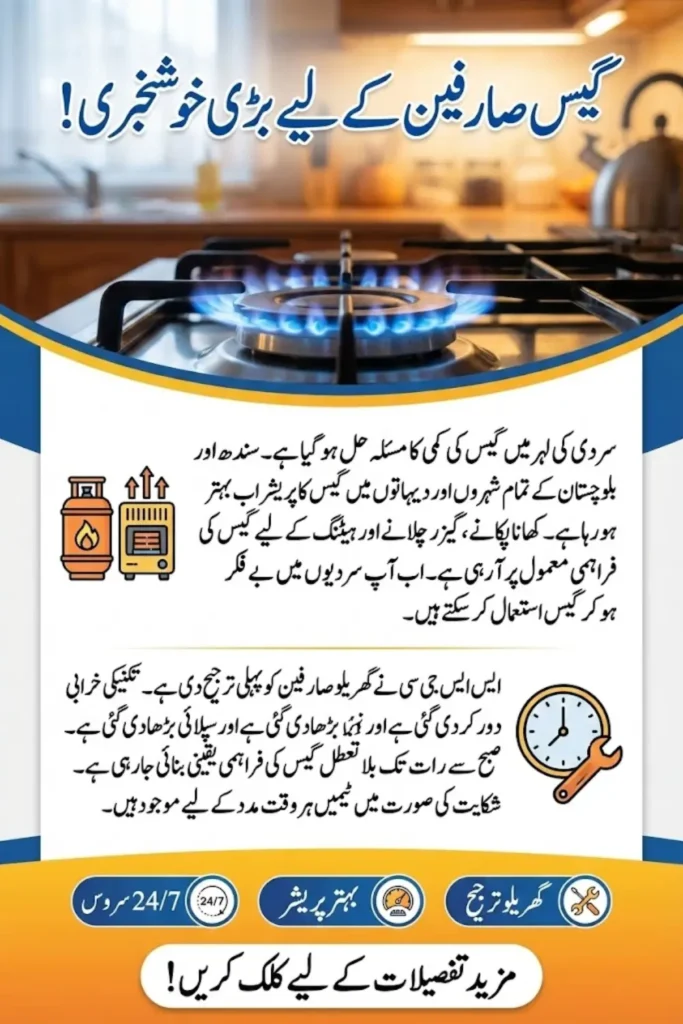
Sui Southern Gas Company Limited (SSGC) has announced positive news for gas consumers amid the ongoing cold wave. The company is actively resolving a technical fault that caused a daily shortfall of approximately 30 million cubic feet of gas. Officials say this deficit is expected to be fully recovered within the coming days, promising improved supply and pressure for households across Sindh and Balochistan.
SSGC Gas Relief 2026
Stable gas supply for households during cold wave
Eligibility
All domestic gas users in Sindh & Balochistan
Benefit
Consistent gas pressure for heating & cooking
Registration
No registration, supply restored automatically
Audience
Households, small businesses & essential users
Usage
Cooking, heating, hot water & daily domestic needs
Verification
Report low-pressure issues via SSGC helpline
Quick Actions / Key Points
- Gas supply is restored automatically, no application needed
- Verify pressure & report issues through SSGC support
- Use gas safely for cooking & heating during cold wave
- Expect ongoing updates & RLNG-based supply stabilization
The cold spell increased domestic demand sharply, especially for space heaters and geysers. SSGC has prioritized household supply to ensure residents have uninterrupted gas service during critical hours. The company’s coordinated response aims to stabilize the system while minimizing inconvenience for consumers.
Also Read: Balochistan 2026 Electric Bike Scheme – Apply Now for Students, Women & Government Employees
Areas Benefiting from Improved Gas Supply
Gas supply is showing signs of recovery across key regions in Sindh and Balochistan. Urban and rural households alike are witnessing better pressure, allowing normal domestic use for cooking, heating, and hot water. Areas that previously experienced low-pressure issues are gradually returning to standard service levels.
Key areas benefiting include:
| Province | Major Cities & Towns | Supply Status |
|---|---|---|
| Sindh | Karachi, Hyderabad, Sukkur | Pressure improving, normal household usage restored |
| Balochistan | Quetta, Khuzdar, Gwadar | Gradual recovery, emergency support deployed |
Rural localities and tail-end distribution points are also prioritized, with SSGC teams actively working to resolve low-pressure complaints across all franchise areas.
Also Read: Jaecoo J5 Official Price, Variants, and Features Launched in Pakistan
Reasons Behind the Previous Shortages
Several factors contributed to the recent gas shortages. First, an unexpected cold spell sharply increased domestic consumption, driving up demand by nearly 10 percent. Households relied heavily on geysers and space heaters, extending cooking and heating hours.
Second, a technical fault in the upstream supply reduced gas availability by approximately 30 million cubic feet per day. This issue affected multiple distribution points, particularly at tail-end localities. As a result, normal pressure dropped in several areas, causing temporary inconvenience for domestic users.
Also Read: Petrol & Diesel Prices Slashed from January 26 – Latest MS & HSD Rates Update
Steps Taken to Stabilize Gas Distribution
SSGC implemented several measures to manage the gas shortfall and prioritize household needs. The company diverted about 90 million cubic feet of reliquefied natural gas (RLNG) into the network to meet rising demand. In addition, an approved load management plan was executed to ensure essential supply for homes.
- Temporary curtailment of gas to fertilizer plants
- Weekly industrial closures to redirect supply toward domestic users
- Deployment of 24-hour response teams for low-pressure complaints
- Monitoring system pressure and adjusting flows in real-time
These steps are designed to maintain uninterrupted domestic supply from 5 am to 10 pm while mitigating disruptions caused by the technical fault and cold wave demand.
Also Read: Pakistan Petrol & HSD Price Cut from January 1, 2026 – Latest Fuel Rates Update
Impact on Households & Businesses During Cold Wave
Households have benefited significantly from the restored supply, with consistent gas pressure supporting heating, cooking, and hot water usage. Families report improved comfort during early mornings and late evenings, which were previously affected by low pressure.
Industries, particularly fertilizer plants, faced temporary curtailments under the load management plan. While some production schedules were adjusted, priority remained on ensuring household supply. The measures have balanced both domestic needs and industrial requirements, reducing the overall impact of the cold wave.
| Sector | Effect of Supply Measures | Notes |
|---|---|---|
| Domestic | Consistent gas pressure restored | Households report normal usage |
| Industrial | Reduced hours for selected plants | Priority given to domestic supply |
| Commercial | Stabilized supply during peak hours | Essential businesses supported |
Final Summary
SSGC has taken decisive steps to ensure gas supply stability during the cold wave, addressing both technical issues and increased domestic demand. With upstream faults being resolved and RLNG diversions in place, households across Sindh and Balochistan are now experiencing improved service.
Consumers are advised to continue following safety practices while using gas appliances and report any low-pressure issues promptly. The company’s 24-hour teams remain operational to provide support, making the ongoing winter months safer and more comfortable for residents.
Also Read: Gas Prices 2026: Petroleum Minister Confirms No Hike – What Consumers Need to Know
FAQs
What caused the recent gas shortage in Sindh and Balochistan?
A combination of a technical fault upstream and increased domestic demand due to the cold wave caused the temporary shortage.
How has SSGC stabilized gas supply for households?
The company diverted RLNG, implemented load management, curtailed industrial supply, and deployed 24-hour response teams.
Which areas are now benefiting from improved gas pressure?
Major cities in Sindh, including Karachi and Hyderabad, and Balochistan cities like Quetta and Gwadar are seeing restored pressure.
Will industries face further gas curtailments during the cold wave?
Temporary reductions may continue for non-essential industries, but household supply remains the top priority.
Also Read: Rs. 63 Billion Railway Modernization Approved – Sindh & Federal Govt Launch Mega Project