Punjab Introduces Biometric Verification and Digital Reforms for Matric and Inter Exams 2026
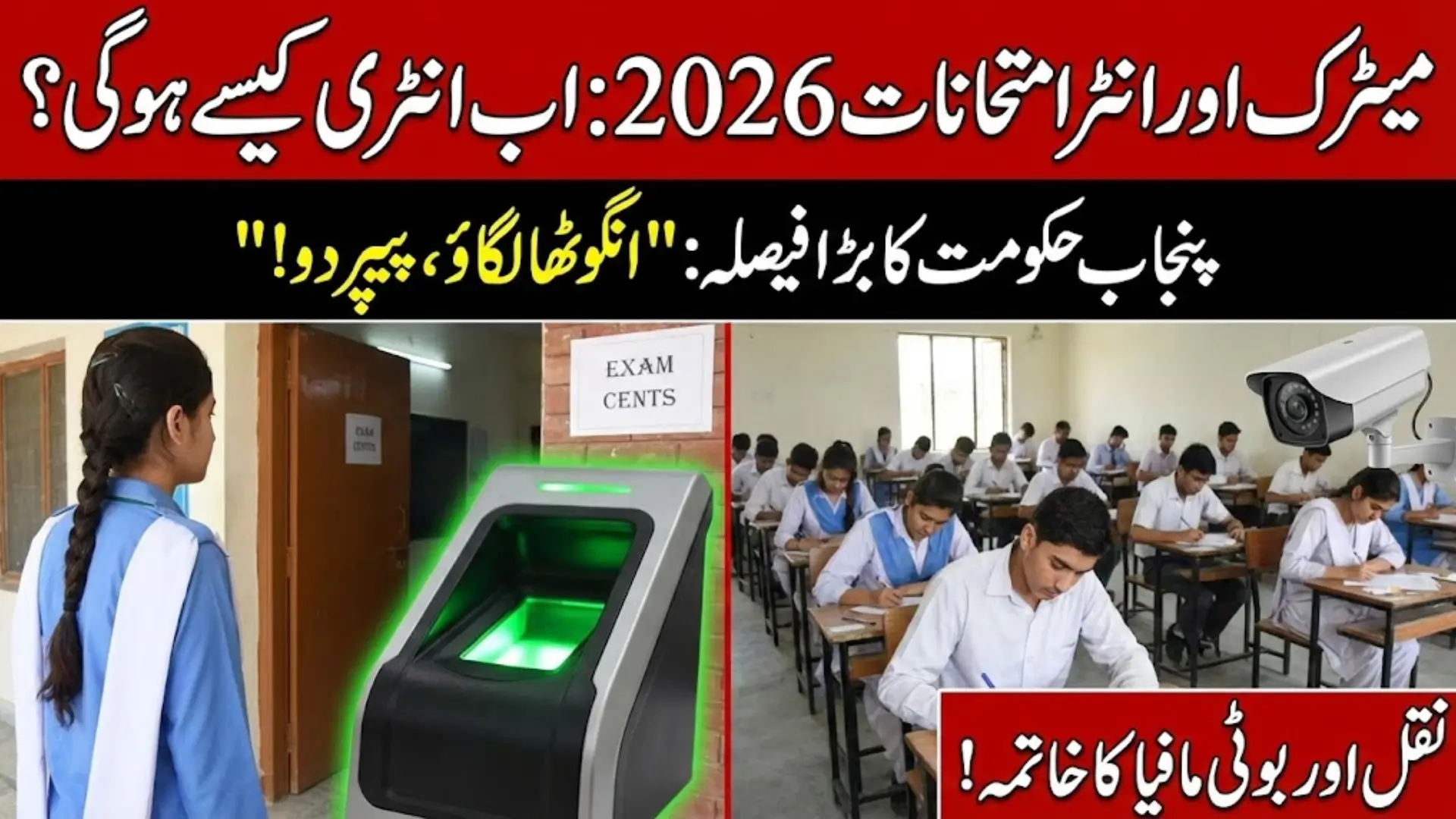
Punjab Introduces Biometric Verification
Punjab is set to introduce major reforms in the 2026 Matriculation and Intermediate examinations. Students appearing in these exams will now undergo digital biometric attendance verification, marking a significant step toward modernizing the examination process. These changes aim to create a more transparent and credible system while reducing opportunities for fraud and unfair practices.
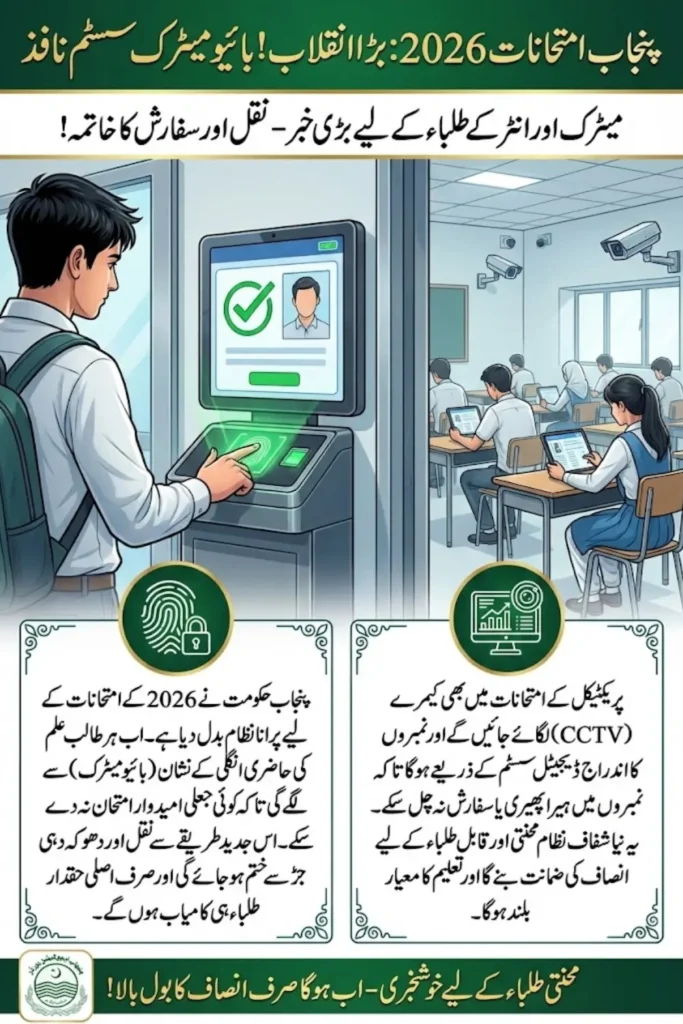
Punjab Matric & Inter Exam Reforms 2026
Digital Biometric Verification & Transparent Evaluation for Students
Student identity verification at exam centers.
- Digital attendance tracking
- Prevents impersonation
- Ensures accurate participation records
Standardized assessment & monitoring in practical exams.
- CCTV monitoring during practical exams
- Uniform grading criteria
- Reduces favoritism & inconsistencies
Marks entered electronically for transparency.
- Reduces human error & tampering
- Centralized system across all boards
- Secure storage of student records
Improved pay & training for exam staff.
- Higher salaries to reduce external influence
- Digital system training
- Performance monitoring for accountability
Strict measures against corruption & malpractice.
- Legal action against manipulation
- Ensures equal opportunity for all students
- Strengthens public trust
Fair, transparent and credible evaluation process.
- Reduced cheating & impersonation
- Uniform assessment across all boards
- Reliable results reflecting true performance
The reforms come after repeated complaints about the traditional examination system, including issues in practical exams, manual handling of marks, and manipulation through influence. With these updates, Punjab education authorities hope to ensure that all students are assessed fairly, giving hardworking candidates a level playing field.
High-Level Meeting and Key Officials
A high-level meeting was held at the Board of Intermediate and Secondary Education Lahore to discuss these reforms. The session was chaired by Muzammil Mehmood, Chairman of the Task Force Committee on Boards. Other senior officials included Additional Secretary Higher Education Boards Nauman Jameel, Lahore Board Secretary Rizwan Nazeer, Controller of Examinations Tauseef ur Rehman, and representatives from all nine Punjab boards.
During the meeting, officials emphasized the importance of adopting technology to strengthen the examination system. The discussion focused on ensuring integrity, eliminating fraudulent practices, and introducing digital monitoring tools to make the process more efficient and secure.
آسان طریقۂ بایومیٹرک تصدیق (Biometric Verification) – طلبہ کے لیے رہنمائی
پنجاب میں 2026 کے میٹرک اور انٹر امتحانات کے لیے بایومیٹرک تصدیق کا طریقہ نہایت آسان اور منظم بنایا گیا ہے۔ امتحانی مرکز میں داخلے سے پہلے طالب علم کی شناخت ڈیجیٹل مشین کے ذریعے تصدیق کی جائے گی، جس میں عموماً انگوٹھے کا نشان یا فنگرپرنٹ استعمال ہوگا۔ طالب علم کو صرف اپنا اصل شناختی کارڈ یا بی فارم (جہاں لاگو ہو) ساتھ لانا ہوگا، باقی تمام عمل چند سیکنڈ میں مکمل ہو جائے گا اور حاضری خودکار نظام میں درج ہو جائے گی۔
اس آسان نظام کا مقصد طلبہ کو کسی پریشانی میں ڈالنا نہیں بلکہ جعلی امیدواروں اور نقل جیسے مسائل کا خاتمہ کرنا ہے۔ بایومیٹرک تصدیق سے نہ صرف شفافیت بڑھے گی بلکہ ہر طالب علم کو برابری کی بنیاد پر امتحان دینے کا موقع ملے گا۔ طلبہ کو ہدایت دی جائے گی کہ وہ مقررہ وقت سے پہلے مرکز پہنچیں، تاکہ بایومیٹرک عمل باآسانی مکمل ہو اور امتحان بغیر کسی رکاوٹ کے شروع ہو سکے۔
Biometric Verification for Students
Punjab’s education boards will implement biometric verification for all students appearing in Matric and Inter exams. This system will digitally verify a student’s identity at the examination center before allowing entry. The goal is to prevent fake candidates from taking exams and to maintain the credibility of the results.
Key highlights of the biometric system include:
- Digital attendance tracking for all registered students
- Prevention of impersonation during exams
- Ensuring accurate records of student participation
By introducing biometric verification, authorities hope to strengthen accountability and give genuine students a fair chance to succeed.
Reform of Practical Examinations
Practical exams have long faced criticism due to subjective grading, favoritism, and weak oversight. To address this, Punjab boards will apply standardized assessment criteria for all practical exams. Students will now be evaluate with the same rigor as theory papers, reducing inconsistencies in marking.
Other measures include:
- Installation of CCTV cameras in laboratories during practical exams
- Monitoring to prevent cheating and external interference
- Uniform guidelines for all boards to ensure fairness
These reforms aim to restore confidence in practical assessments and ensure students’ skills are accurately measured.
Digital Marking System
The new reforms also include a digital marking system. Marks for both theory and practical exams will be entered electronically, minimizing human error and the risk of tampering.
Benefits of the digital marking system:
| Feature | Advantage |
|---|---|
| Electronic entry of marks | Reduces manual errors and tampering |
| Centralized system | Uniform results across all boards |
| Secure data storage | Protects students’ records from manipulation |
This system will ensure that results are transparent, accurate, and quickly processed.
Improved Compensation for Exam Staff
To maintain integrity, Punjab boards plan to increase compensation for examination supervisors and staff. Better pay is expected to reduce the pressure and influence from external sources, encouraging honest and professional conduct during exams.
Additional measures include:
- Training programs for staff on digital systems
- Clear protocols for handling irregularities
- Performance monitoring to maintain accountability
Higher salaries and proper training are intended to create a reliable workforce capable of supporting the reforms effectively.
Zero-Tolerance Policy on Corruption
The Task Force Committee Chairman, Muzammil Mehmood, emphasized a strict zero-tolerance approach toward corruption. Legal action will be taken against anyone attempting to manipulate exam results through bribery, political influence, or personal connections.
The board also aims to:
- Prevent malpractice during exams
- Ensure equal opportunities for all students
- Strengthen public trust in the examination system
This approach is expected to set a new standard for integrity in Punjab’s education system.
Expected Benefits for Students
The reforms are designed to benefit hardworking students who were previously disadvantaged due to corruption or favoritism. Biometric verification, CCTV monitoring, and standardized marking are steps toward a fairer evaluation process.
Students can expect:
- Reduced chances of cheating or impersonation
- Fair assessment across all boards
- Transparent and credible results
The 2026 exams are expect to reflect a new era of trust and reliability in Punjab’s education boards.
Implementation and Guidelines
Lahore BISE has announce that detailed technical guidelines and implementation plans will be share with schools and examination centers well before the exam season. Authorities will ensure that every center is prepare for biometric verification, digital marking, and monitoring systems.
This preparation will include:
- Installation of necessary digital infrastructure
- Training for staff and supervisors
- Clear instructions for students regarding new procedures
Proper implementation is critical to ensuring the reforms achieve their intended goals.
Conclusion
Punjab’s introduction of biometric verification, digital marking, and strict oversight for practical exams marks a significant step toward a modern, transparent, and credible education system. These reforms aim to protect students’ rights, prevent malpractice, and ensure that results are fair and trustworthy. The 2026 examination cycle is expect to set a positive precedent for future years.
FAQs
What is biometric verification in Punjab exams?
Biometric verification is a system that digitally confirms a student’s identity before allowing entry into the exam center.
Will practical exams be monitor differently in 2026?
Yes, CCTV cameras and standardized assessment criteria will ensure practical exams are fair and secure.
How will digital marking benefit students?
Digital marking reduces human errors, prevents tampering, and ensures accurate results.
When will schools receive guidelines for the new system?
Lahore BISE will provide detailed technical guidelines and instructions well before the 2026 exam season.