PM Apna Ghar Programme: Now NBFCs Can Also Give You a Home Loan

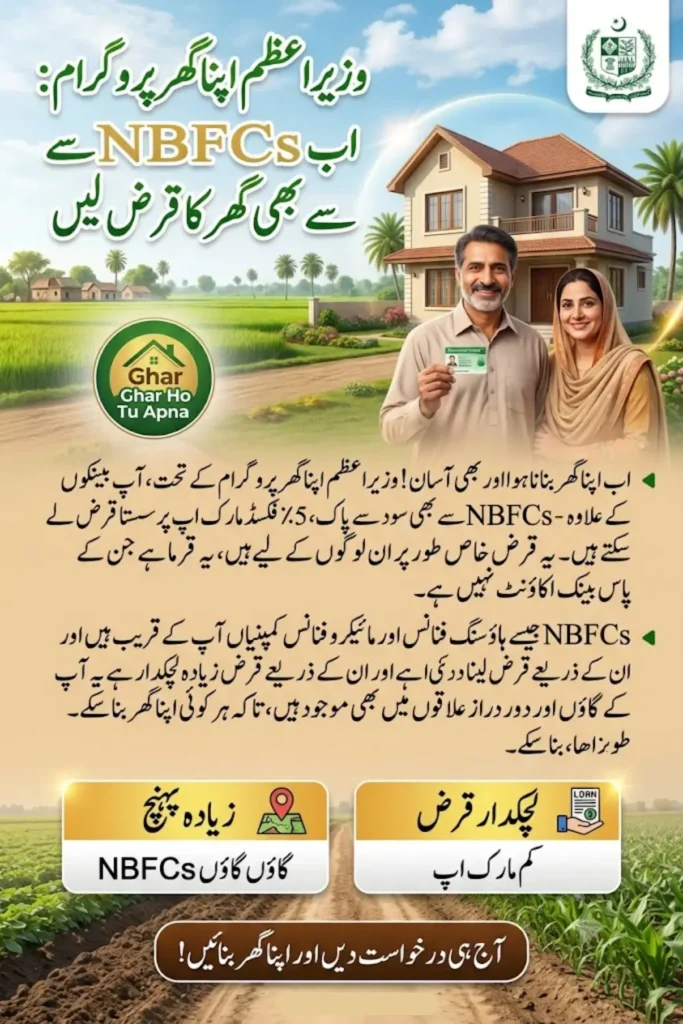
Good news for anyone dreaming of owning their first home in Pakistan. The Prime Minister’s Apna Ghar Programme (PM-AGP) just became a lot more accessible. Until recently, you could only apply for this subsidised housing loan through commercial banks. Now, the federal government has allowed Non-Banking Finance Companies (NBFCs) to offer these loans too — which means more options, wider reach, and an easier path to home ownership, especially for people who don’t have a traditional bank relationship.
In this guide, we’ll explain what this change actually means for you, how much you can now borrow, which companies are eligible, and how the process works — all in simple, easy-to-understand language.
What Is the PM Apna Ghar Programme?
The Wazir-e-Azam Apna Ghar Programme, also called “Ghar Ho Tu Apna” or simply PM-AGP, is a nationwide housing finance scheme launched by Prime Minister Shehbaz Sharif on April 30, 2026. It’s designed to help first-time home buyers get affordable home loans at a heavily subsidised markup rate, instead of paying the high interest rates charged by regular commercial banks.
Here’s a quick snapshot of the programme:
| Detail | Information |
|---|---|
| Launch date | April 30, 2026 |
| Total budget | Rs 3.2 trillion (over 5 years) |
| Target | 500,000 homes nationwide |
| Year-one target | 50,000 homes, backed by Rs 321 billion |
| Coverage | All four provinces, Gilgit-Baltistan, and Azad Jammu & Kashmir |
| Subsidised markup rate | 5% fixed for the first 10 years |
| Maximum loan tenure | Up to 20 years |
| Regulator overseeing the scheme | State Bank of Pakistan (SBP) and SECP |
Until now, this loan was only available through commercial banks, Islamic banks, microfinance banks, and the House Building Finance Company (HBFC). The latest update changes that.
Also Read: Apni Zameen Apna Ghar Scheme 2026 Complete Registration Guide, Eligibility Rules & Subsidy Benefits
What’s New: NBFCs Are Now Part of the Programme
On the recommendation of the Securities and Exchange Commission of Pakistan (SECP), the federal government has officially approved the inclusion of eligible Non-Banking Finance Companies (NBFCs) as Participating Financial Institutions (PFIs) under the PM Apna Ghar Programme.
In simple words: it’s no longer just banks that can give you this subsidised home loan. Certain non-bank housing finance companies, investment finance companies, and microfinance companies can now lend under the same scheme too.
Why Does This Matter?
A large number of Pakistanis, especially in smaller towns and rural areas, don’t have an active relationship with a traditional bank. NBFCs, on the other hand, often have a stronger digital presence and outreach in exactly these underserved areas. By bringing them into the programme, the government is trying to:
- Reach citizens who don’t have conventional banking relationships
- Make use of the wide digital and branch networks of NBFCs in remote areas
- Offer more flexible financing models suited to different income groups
- Speed up the pace of loan disbursement across the country
Also Read: Apni Chat Apna Ghar Scheme 2026 New Housing Plan for Low-Income Families
How Much Can You Borrow Through an NBFC?
The SECP has set clear lending limits depending on the type of NBFC:
| Type of Institution | Maximum Loan Amount |
|---|---|
| Non-bank housing finance companies | Up to Rs 10 million |
| Investment finance companies | Up to Rs 10 million |
| Microfinance companies | Up to Rs 5 million |
These limits are in line with the wider PM-AGP loan structure, where applicants can generally choose loan amounts such as Rs 2.5 million, Rs 5 million, Rs 7.5 million, or Rs 10 million, depending on the value of the property they want to buy, build, or renovate.
Loan Terms: What Stays the Same
Even though NBFCs are now part of the scheme, the core financial terms of the PM Apna Ghar Programme remain unchanged. Here’s what you can expect regardless of whether you apply through a bank or an NBFC:
- Subsidised markup rate: Fixed at 5% per year for the first 10 years — compare that to regular commercial home loans in Pakistan, which usually charge anywhere from 15% to 22%.
- Loan tenure: Up to 20 years in total. After the first 10 years, the rate shifts to the prevailing market rate for the remaining period.
- Eligible use: House purchase, apartment purchase, plot purchase plus construction, or construction on land you already own.
- Government backing: The scheme is built on markup subsidies and risk-sharing support from the government, which is what keeps the effective cost so low for ordinary families.
Who Regulates the NBFCs Under This Scheme?
To make sure NBFCs lend responsibly under the programme, the SECP has issued a dedicated regulatory framework specifically for this purpose. This framework covers:
- Eligibility criteria for NBFCs wanting to join the scheme
- Operational procedures for processing and disbursing loans
- Prudential requirements to keep lending safe and sustainable
- Monitoring mechanisms so the SECP can track how the scheme is being implemented
NBFCs are also allowed to provide this housing finance either through their own resources, or in partnership with other NBFCs, commercial banks, and development finance institutions. This partnership model is expected to further widen the reach of the scheme.
Who Can Apply for a Loan Under PM Apna Ghar Programme?
While NBFC-specific application details are still being rolled out by individual companies, the general eligibility rules for the PM Apna Ghar Programme apply across the board:
- You must be a Pakistani citizen with a valid CNIC.
- You must be a first-time home buyer — meaning you don’t already own residential property anywhere in Pakistan.
- You should have a regular, verifiable source of income.
- Your chosen loan amount should match the value of the property you want to purchase, build, or extend.
Since NBFCs often use more flexible documentation and credit assessment processes compared to traditional banks, this route may be especially useful for:
- Small business owners without formal salary slips
- People living in areas with limited access to bank branches
- Applicants who have struggled to get approved through conventional banking channels
Banks vs NBFCs: What’s the Real Difference?
If you’re wondering whether to apply through a bank or an NBFC, here’s a simple comparison to help you decide:
| Factor | Commercial/Islamic Banks | NBFCs (Housing/Investment/Microfinance) |
|---|---|---|
| Maximum loan (general) | Up to Rs 10 million | Up to Rs 10 million (housing/investment) or Rs 5 million (microfinance) |
| Markup rate | 5% fixed for first 10 years | Same 5% subsidised rate |
| Best suited for | Salaried individuals with formal banking history | Underserved, unbanked, or rural applicants |
| Branch presence | Traditional bank branches | Wider digital and local outreach, especially in remote areas |
| Documentation style | Standard bank paperwork | Often more flexible, tailored to non-traditional income proof |
In short, both routes offer the same subsidised markup, but NBFCs may be a more practical choice if you don’t already have a strong banking relationship.
How to Apply
Since this is a fresh policy update, here’s the general process you can expect when applying through either channel:
- Check your eligibility — confirm you’re a first-time home buyer with a valid CNIC and steady income.
- Choose your lending institution — decide whether a bank, Islamic bank, microfinance institution, HBFC, or an eligible NBFC suits your situation better.
- Visit the official PM Apna Ghar Programme portal or your chosen institution to start your application.
- Submit required documents, including your CNIC, proof of income, and details of the property you want to finance.
- Wait for processing — banks and financial institutions under this scheme are required to complete initial processing within 15 days and give final approval within about a month.
- Loan disbursement — once approved, funds are released according to the purchase or construction stage.
Tip: Since NBFC participation is a very recent addition, not every non-bank company may be onboarded yet. Always confirm with the SECP’s official list of approved Participating Financial Institutions before submitting documents or paying any processing fee.
Also Read: Apni Zameen Apna Ghar Scheme 2026 Online Apply, Plot Ownership Rules & Full Eligibility Explained
Why This Update Is a Big Deal
Pakistan’s housing finance sector has historically been dominated by a handful of large banks, which left millions of people — especially in rural and semi-urban areas — without real access to affordable home loans. By bringing NBFCs into the PM Apna Ghar Programme, the government is essentially:
- Multiplying the number of institutions that can lend under this subsidised scheme
- Using the deep local and digital reach of NBFCs to serve people banks often overlook
- Keeping the same low 5% markup rate, so affordability doesn’t drop even as access widens
- Strengthening financial inclusion, which has been a long-standing challenge in Pakistan
Things to Keep in Mind Before You Apply
- Confirm the NBFC is officially approved as a Participating Financial Institution under PM-AGP — check with the SECP or the programme’s official channels.
- Compare processing timelines and documentation requirements between banks and NBFCs before choosing one.
- Remember the 10-year subsidy window — your markup will shift to the market rate after the first 10 years, so plan your long-term budget accordingly.
- Never pay unofficial “agents” who claim they can guarantee faster approval — this scheme does not require any middleman.
- Keep your CNIC and income documents updated, since verification delays are one of the most common reasons applications get stuck.
Frequently Asked Questions (FAQs)
1. Can NBFCs really give loans under the PM Apna Ghar Programme now? Yes. The federal government, on SECP’s recommendation, has officially allowed eligible NBFCs to participate as Participating Financial Institutions under the scheme.
2. How much can I borrow from an NBFC under this scheme? Non-bank housing finance and investment finance companies can lend up to Rs 10 million, while microfinance companies can lend up to Rs 5 million.
3. Is the markup rate different if I apply through an NBFC instead of a bank? No. The subsidised 5% fixed markup rate for the first 10 years applies whether you apply through a bank or an eligible NBFC.
4. Who regulates NBFCs under this housing scheme? The Securities and Exchange Commission of Pakistan (SECP) has issued a dedicated regulatory framework covering eligibility, lending standards, and monitoring for NBFCs participating in the programme.
5. Is this a good option if I don’t have a bank account? Yes, that’s actually one of the main goals of this update — to help people without traditional banking relationships access affordable housing finance through NBFCs’ wider digital and local outreach.
6. Can NBFCs partner with banks to give this loan? Yes. NBFCs can provide housing finance either from their own resources or in partnership with other NBFCs, commercial banks, and development finance institutions.
7. What is the maximum repayment period? The maximum loan tenure under PM Apna Ghar Programme is 20 years, with the subsidised 5% rate applying for the first 10 years.
8. Do I need to be a first-time home buyer to qualify? Yes. The scheme is designed for first-time home buyers who do not already own residential property anywhere in Pakistan.
Also Read: Apna Ghar, Mehfooz Ghar: Punjab’s New Home Safety Loan Scheme (2026 Guide)
Final Thoughts
Allowing NBFCs to join the PM Apna Ghar Programme is one of the most practical updates to Pakistan’s housing finance landscape this year. It doesn’t change the core benefit of the scheme — the subsidised 5% markup rate is still there — but it does open up a lot more doors for people who were previously left out simply because they didn’t have the right kind of banking relationship. If you’ve been putting off applying for a home loan because your local bank branch felt out of reach, it might be worth checking whether an NBFC in your area is now part of this scheme.
Also Read: Apni Chhat Apna Ghar Scheme Phase 2 Eligibility, Installment Plan & Online Apply Guide 2026