Jazz and Islamic Relief Pakistan Partner to Promote Digital Inclusion and Community Resilience
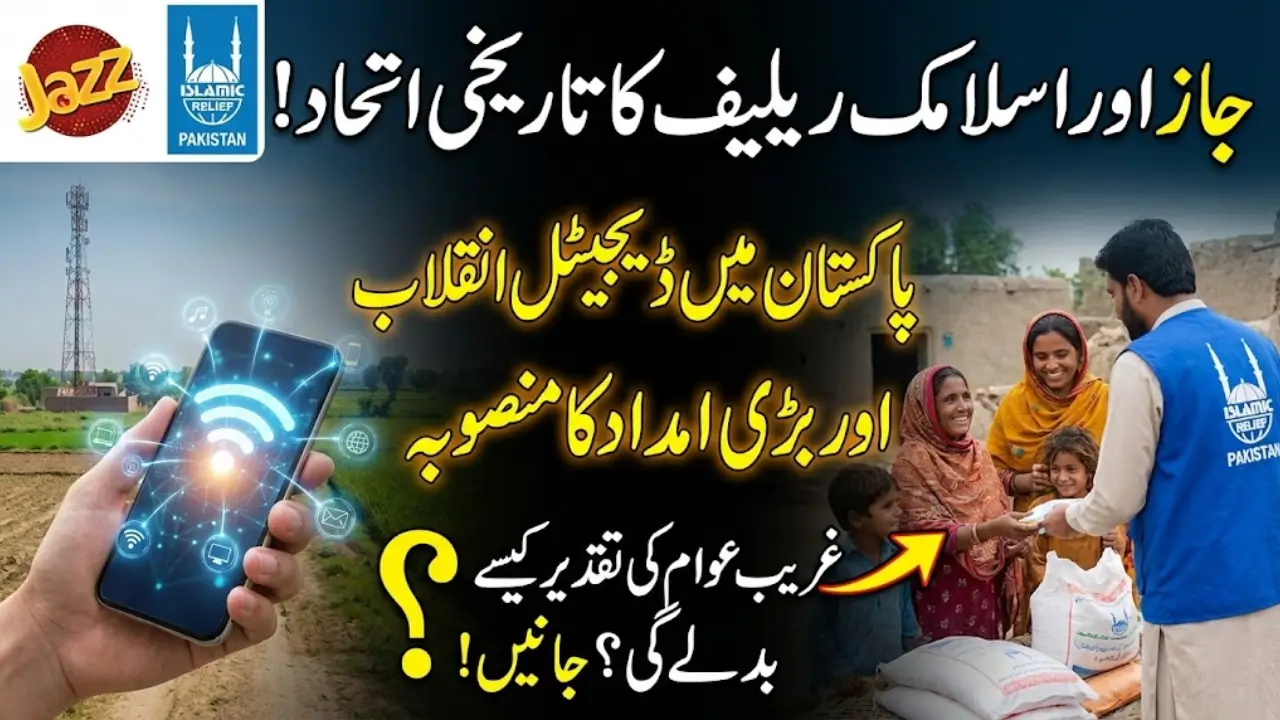
Jazz and Islamic Relief Pakistan
Jazz Pakistan and Islamic Relief Pakistan have joined hands through a strategic Memorandum of Understanding (MoU) to advance digital inclusion and strengthen community resilience across the country. The collaboration aims to leverage Jazz’s advanced digital infrastructure and Islamic Relief’s humanitarian expertise to address the needs of underserved and climate-vulnerable communities. By combining technology with on-ground support, this partnership seeks to create scalable solutions that benefit communities in the long term while improving immediate humanitarian response.
Jazz & Islamic Relief Pakistan Partnership 2026
Promoting digital inclusion and community resilience
- Leverage Jazz digital infrastructure with Islamic Relief humanitarian expertise
- Focus on women, youth, and marginalized groups
- Create scalable solutions for long-term impact
| Area of Collaboration | Key Benefits |
|---|---|
| Digital literacy & skills | Improved employment and economic participation |
| Entrepreneurship readiness | Sustainable income generation for women and youth |
| Support for smallholder farmers | Better market access and informed decision-making |
| Early-warning & response | Increased community preparedness for climate risks |
- Poverty graduation for ultra-poor households
- Education continuity for orphan-guardian families
- Psychosocial support for children
- Promote long-term community self-reliance
- Digital tools for education, entrepreneurship, and market access
- Climate-smart platforms for farmers
- Early-warning systems for disaster preparedness
| Initiative | Expected Outcome |
|---|---|
| Digital literacy programs | Increased skills and job opportunities |
| Entrepreneurship & livelihoods | Sustainable income and economic independence |
| Climate-smart tools for farmers | Improved productivity and risk management |
| Education & psychosocial support | Continuous learning and emotional well-being for children |
- What is the main goal? Promote digital inclusion & community resilience
- Who benefits? Women, youth, farmers, ultra-poor households
- How will technology be used? Education, market access, early-warning & coordination
- What is unique? Combines digital innovation with humanitarian expertise
Through this initiative, both organizations aim to ensure that women, youth, and marginalized groups have access to essential digital tools, education, and resources. By focusing on practical solutions, the partnership emphasizes the use of technology not just for connectivity but as a means of creating opportunities, improving livelihoods, and enhancing resilience in vulnerable areas.
Also Read: Sahulat Bazaars in Rawalpindi: 16 Markets to Offer Affordable Essentials During Ramadan 2026
Partnership Details
The MoU between Jazz and Islamic Relief Pakistan outlines a comprehensive framework for collaboration that prioritizes both humanitarian and technological goals. Jazz brings its nationwide connectivity and digital expertise, while Islamic Relief contributes its deep understanding of community needs and emergency response capabilities. Together, the two organizations will work to integrate digital solutions into humanitarian efforts, ensuring that interventions are effective, timely, and scalable.
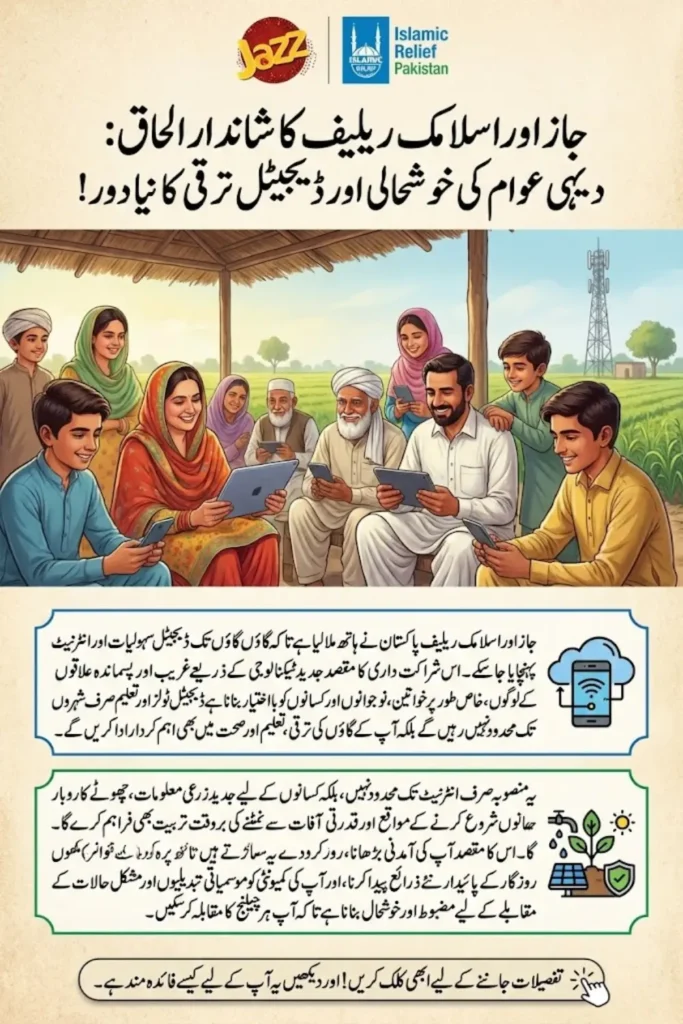
Key areas of focus include the development of technology-driven programs for communities at risk of climate-related disasters. This approach ensures that digital tools are not only use for communication but also for empowering communities to better prepare for emergencies. By combining their strengths, Jazz and Islamic Relief Pakistan aim to create a model that can be adapt to various regions facing different socio-economic and environmental challenges.
Also Read: BISP 8171 January 2026 Q4 Status Check: Complete Online Guide to Verify Your Payment
Key Areas of Collaboration
The partnership will focus on several strategic initiatives to support digital inclusion and community development. First, there will be programs to enhance digital literacy and skills among women and youth, enabling them to participate actively in the economy. Second, entrepreneurship readiness and climate-smart livelihood initiatives will be promot to help communities build sustainable income sources.
Other focus areas include supporting smallholder farmers with access to market information, agri-business guidance, and digital tools for improved productivity. Early-warning systems and digital platforms will also be develop to strengthen preparedness for climate-related risks. This multi-facet approach ensures that communities are equip to face both immediate and long-term challenges.
Table: Key Collaboration Areas and Benefits
| Area of Collaboration | Key Benefits |
|---|---|
| Digital literacy & skills | Improved employment and economic participation |
| Entrepreneurship readiness | Sustainable income generation for women and youth |
| Support for smallholder farmers | Better market access and informed decision-making |
| Early-warning & response | Increased community preparedness for climate risks |
Social Impact Initiatives
Beyond technology, the partnership also focuses on social welfare and poverty alleviation. Programs for poverty graduation aim to support ultra-poor households in achieving financial stability through targeted interventions and access to digital resources. Education continuity and psychosocial support will be provided for orphan-guardian families, ensuring that children continue learning and receive emotional guidance.
Community resilience is a major goal of the collaboration. By addressing both economic and social needs, the partnership seeks to create long-term self-reliance among vulnerable populations. These initiatives are designed to empower communities to recover from crises more quickly and reduce dependence on emergency aid in the future.
Also Read: Major Relief for Teachers: Peshawar High Court Orders Social Security Benefits
Leadership Perspectives
Syed Zaheer Mehdi, Group Chief Corporate and Regulatory Officer at Jazz, emphasized that connectivity is about more than access; it represents resilience, opportunity, and inclusion. He stated that this collaboration reflects Jazz’s commitment to leveraging technology as a force for social good, helping communities prepare for, respond to, and recover from challenges more effectively.
Asif Sherazi, Country Director of Islamic Relief Pakistan, highlighted the importance of combining humanitarian expertise with digital solutions. He explained that the partnership is focused on developing practical and scalable interventions that address immediate needs while also promoting long-term self-reliance and resilience for vulnerable communities.
Also Read: SSGC Brings Relief for Gas Users – Supply Stability Improves Nationwide During Cold Wave
Conclusion
The collaboration between Jazz Pakistan and Islamic Relief Pakistan represents a new approach to humanitarian support through digital innovation. By integrating technology with community-focused programs, this partnership aims to create lasting impact, improve livelihoods, and ensure better preparedness for emergencies. Communities across Pakistan are expected to benefit from enhanced digital access, improved social support systems, and more resilient infrastructures.
Table: Expected Outcomes of the Partnership
| Initiative | Expected Outcome |
|---|---|
| Digital literacy programs | Increased skills and job opportunities |
| Entrepreneurship & livelihoods | Sustainable income and economic independence |
| Climate-smart tools for farmers | Improved productivity and risk management |
| Education & psychosocial support | Continuous learning and emotional well-being for children |
FAQs
What is the main goal of the Jazz and Islamic Relief Pakistan partnership?
The partnership aims to promote digital inclusion, strengthen community resilience, and enhance humanitarian response across Pakistan.
Who will benefit from this collaboration?
Women, youth, smallholder farmers, ultra-poor households, and climate-vulnerable communities will benefit from these initiatives.
How will technology be used in this partnership?
Digital tools will support education, entrepreneurship, market access for farmers, early-warning systems, and improved humanitarian coordination.
What is unique about this collaboration?
It combines digital innovation with humanitarian expertise to create scalable, long-term solutions for vulnerable communities.