Pakistan Budget 2026-27 Approved with Major Tax Relief and Welfare Measures
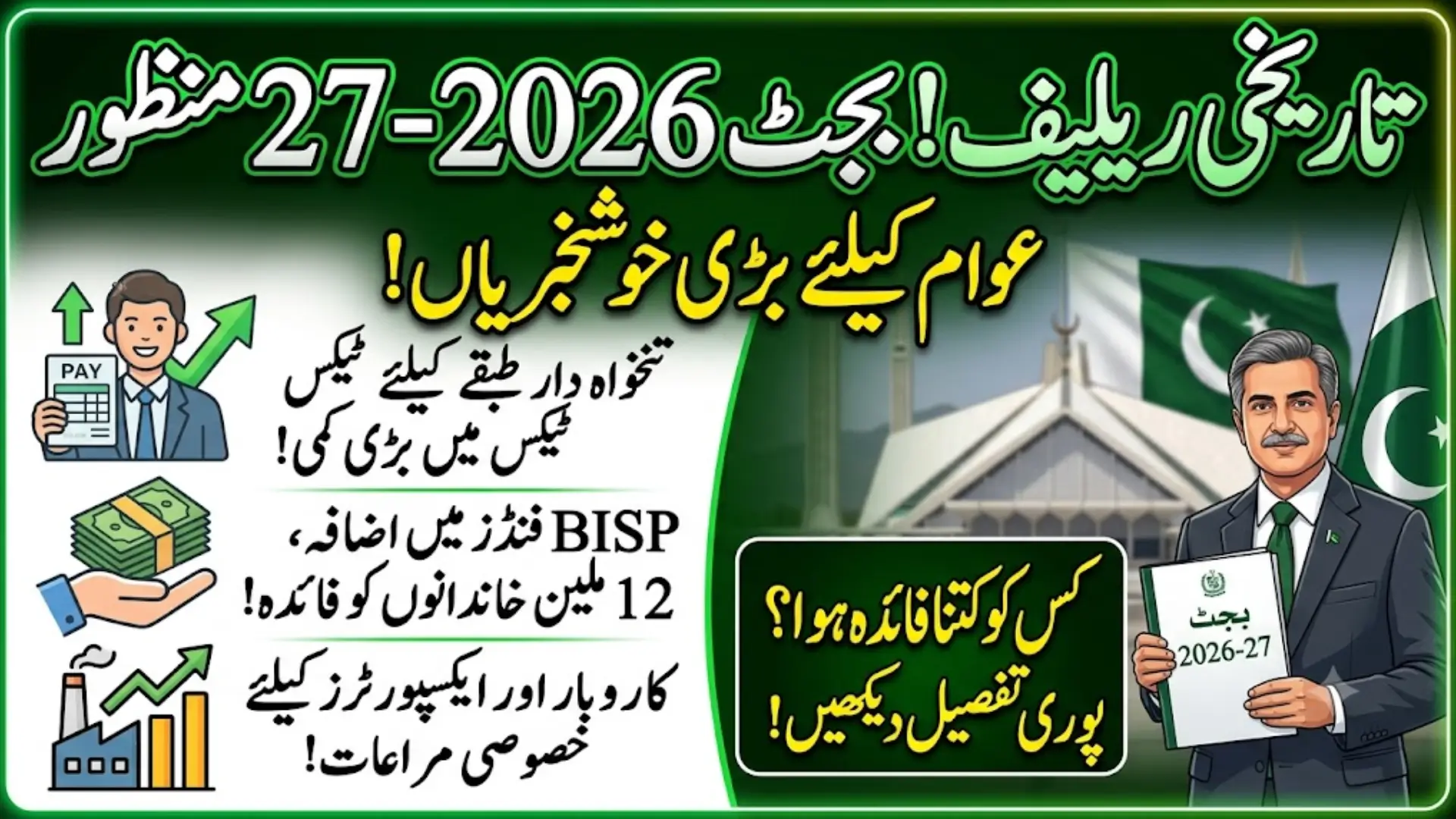
Pakistan’s Budget 2026-27 has officially been approved, bringing a wide range of tax reforms, welfare initiatives, and development projects aimed at supporting economic growth and providing relief to citizens. The new fiscal plan focuses on improving revenue collection, encouraging investment, expanding social welfare programs, and strengthening key sectors such as infrastructure, energy, housing, education, and technology.
With significant allocations for public development and targeted tax reductions for individuals and businesses, the budget seeks to balance economic stability with public welfare while laying the foundation for long-term growth.
Pakistan Budget 2026-27 Targets Economic Growth and Revenue Expansion
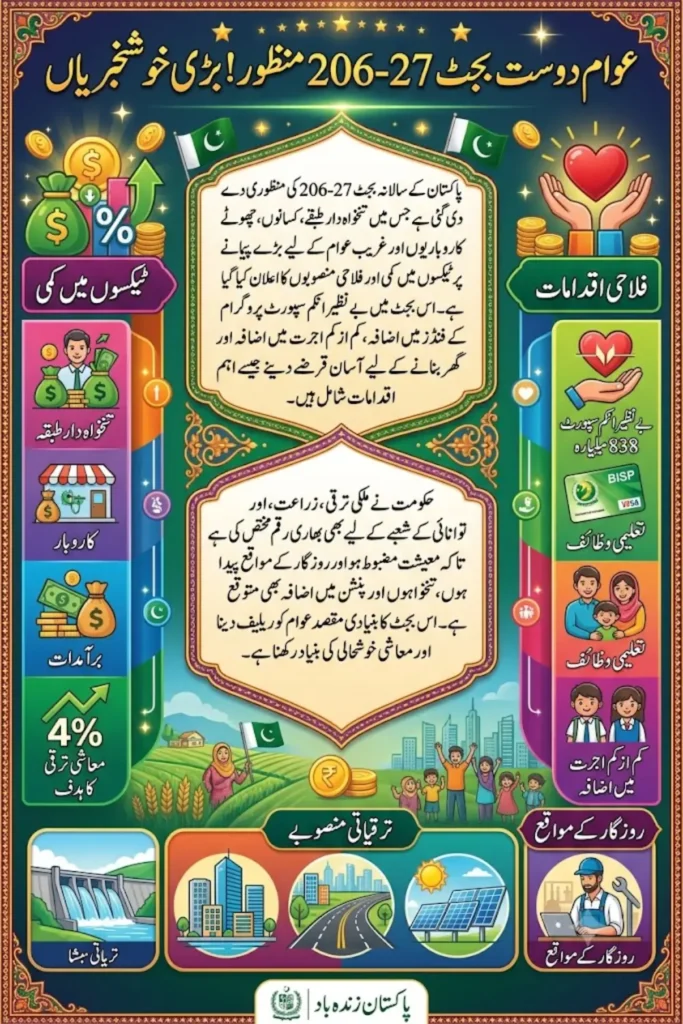
The government has set an ambitious economic agenda for the new fiscal year. Under the Pakistan Budget 2026-27, the GDP growth target has been fixed at 4 percent, while inflation is projected to remain around 8.2 percent.
To support government operations and development spending, the Federal Board of Revenue (FBR) has been assigned a revenue collection target of Rs. 15.264 trillion, representing a significant increase compared to the previous fiscal year. Meanwhile, total federal expenditure has been set at Rs. 18.771 trillion, with a substantial portion allocated to debt servicing and essential government functions.
The budget reflects the government’s efforts to maintain fiscal discipline while creating opportunities for investment, employment generation, and economic expansion.
Pakistan Budget 2026-27 Introduces Tax Relief for Salaried Individuals and Businesses
One of the most notable features of the Pakistan Budget 2026-27 is the introduction of tax relief measures for salaried employees, businesses, exporters, and investors.
The government has reduced income tax rates across several salary brackets and proposed the removal of the salary surcharge, providing welcome relief to working professionals. Businesses will also benefit from adjustments in taxation policies, including reductions in certain tax burdens and super tax rates for eligible companies.
The construction and real estate sectors have received incentives through lower withholding taxes on property transactions. Export-orient industries and IT companies have also been grant important tax relief measures to improve competitiveness and support foreign exchange earnings.
Additionally, the tax on foreign credit and debit card transactions has been significantly reduce, while the Capital Value Tax on financial assets is propose to be abolish. These changes aim to encourage investment and simplify the overall tax environment.
Pakistan Budget 2026-27 Expands Welfare Programs and Public Support
Social welfare remains a key priority in the new budget. The Benazir Income Support Programme (BISP) has received an increased allocation of Rs. 838 billion, allowing the program to expand support to approximately 12 million families across the country.
Educational stipends for millions of children will continue under BISP, helping improve school enrollment and reduce financial barriers to education.
The government has also allocated substantial funding for the PM Apna Ghar Scheme to support affordable housing and home financing initiatives. In addition, government employees and pensioners are expect to receive a 7 percent increase in salaries and pensions, while the minimum wage is propose to increase by 10 percent.
These measures are intend to strengthen social protection, improve living standards, and provide financial support to low and middle-income households.
Pakistan Budget 2026-27 Prioritizes Infrastructure, Energy, and Development Projects
A major portion of the budget has been dedicate to development spending and infrastructure improvement. Significant investments have been allocate to roads, highways, railways, public transportation systems, water projects, and urban development initiatives.
Major national projects such as Diamer-Bhasha Dam, Mohmand Dam, railway upgrades, and transport corridor developments will continue to receive funding. Water sector projects have been prioritize to address future water security challenges and support agricultural development.
The energy sector has also received considerable attention, with investments planned for both traditional and renewable energy projects. Support for clean energy solutions demonstrates the government’s commitment to sustainable development and long-term energy security.
Additional allocations have made for healthcare, higher education, technical training, housing development, and climate-resilient infrastructure projects aim at improving public services and economic productivity.
Also Read: Punjab Tourism Internship Program 2026 Online Apply, Stipend, Eligibility & Complete Selection Guide
Pakistan Budget 2026-27 Brings Digital Reforms and Key Policy Changes
The Pakistan Budget 2026-27 introduces several digital transformation initiatives designed to modernize governance and improve economic efficiency. The government plans to expand digital payment systems, strengthen the National Data Exchange Layer, and advance artificial intelligence and digital infrastructure programs.
The FBR will continue implementing modernization reforms, including faceless assessments, data integration systems, algorithm-based settlements, and enhanced use of technology to improve tax administration.
The budget also introduces new facilities for import mobile phone users by allowing PTA and DIRBS taxes to paid in installments. Electric vehicle adoption is being encourage through various incentives, while certain duties on luxury and high-engine-capacity vehicles have been revise.
These reforms reflect the government’s broader vision of creating a more digital, transparent, and technology-driven economy.
Conclusion
The Pakistan Budget 2026-27 represents a comprehensive effort to support economic growth, provide tax relief, expand social welfare, and strengthen national development. Through targeted tax reforms, increased welfare spending, major infrastructure investments, and digital transformation initiatives, the government aims to create a more stable and competitive economic environment.
For salaried individuals, businesses, exporters, investors, and low-income families, the budget offers a combination of relief measures and development opportunities. While the success of these initiatives will depend on effective implementation, the approved budget outlines a clear roadmap for economic progress and public welfare in the coming fiscal year.