
IPR Drives Education Reforms in KP – Transparent Policies & Practical Development Roadmap Unveiled
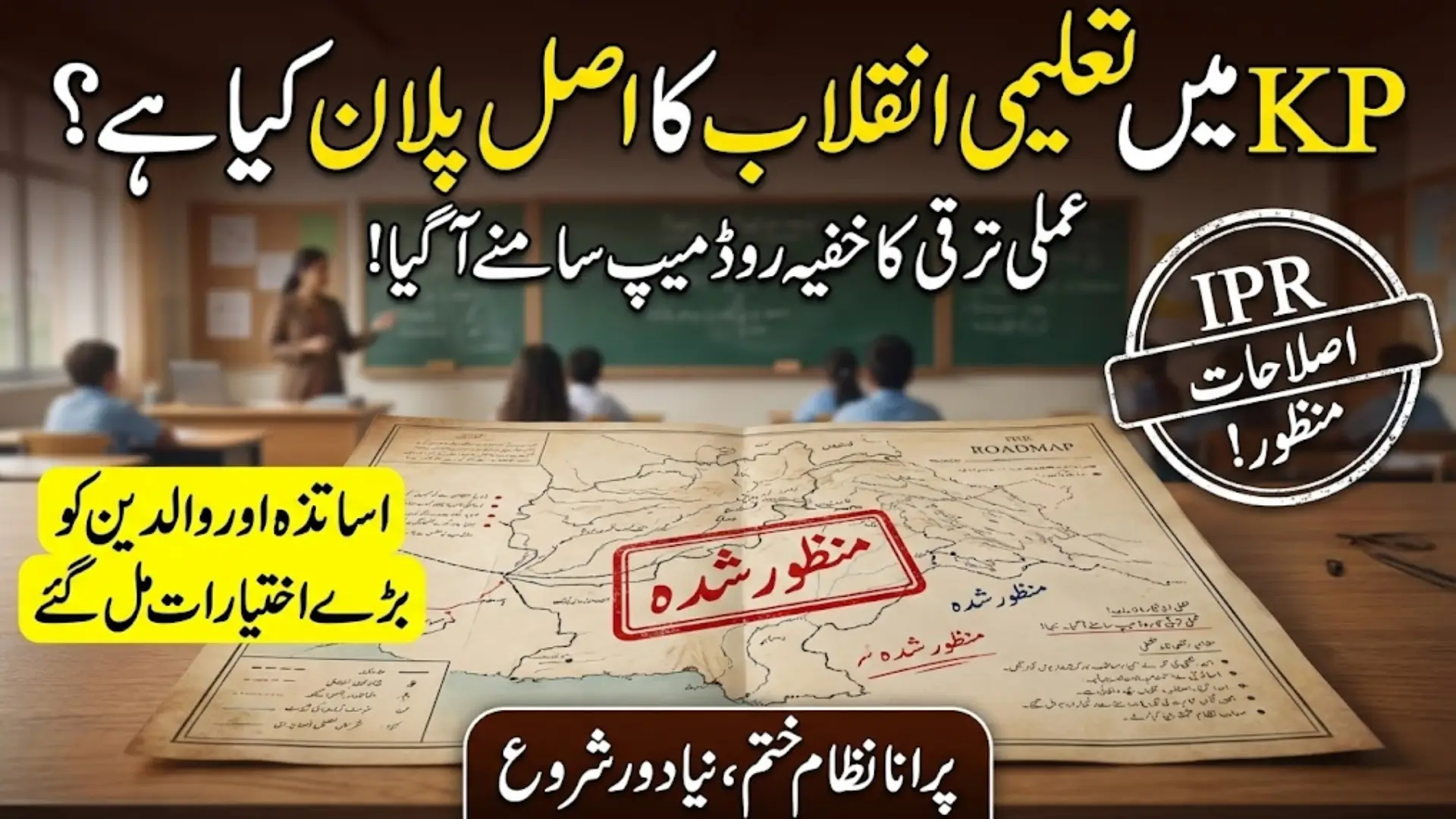
Education Reform Initiative in Khyber Pakhtunkhwa
The Khyber Pakhtunkhwa education sector has officially embarked on a journey toward a clean, transparent, and results-oriented system. The provincial cabinet recently approved these landmark reforms with a singular focus: transparency and accountability.
“Naya nizam, nayi umeed aur behtar mustaqbil”
In the past, funds allocated for schools often got lost in bureaucracy or were not utilized effectively. The new initiative aims to ensure the fair and effective distribution of public funds. The core idea is to make schools independent and strong at the local level. Instead of waiting for decisions from the capital, schools will now have the resources to manage their immediate needs. This initiative is a “ray of hope” for millions of students who rely on government schools for their future.
You Can Also Read: CM Punjab Hi-Tech Farm Mechanization Program – Modern Machinery Subsidy & Apply Process
Role of IPR in Shaping Education Policies
The concept behind these reforms is driven by the need for an Independent Performance Review (IPR) of how the education sector functions. The role of these reforms is to bridge the gap between policy makers and the actual classroom environment.
KP Education Reform Initiative – 2025
Transparent, accountable and performance-based education system
🏛️ Cabinet Approved Reforms
KP launches clean education governance
- Focus on transparency & accountability
- Funds reach schools directly
- Local-level empowerment
📊 IPR-Based Policy Model
Independent Performance Review framework
- Ground realities considered
- Parents & teachers involved
- Policy-to-classroom bridge
👨👩👧 Parent Teacher Councils
PTCs made central decision-makers
- School-level financial control
- Reduced bureaucratic delays
- Community ownership increased
📚 Classroom Consumables
Improved funding for teaching tools
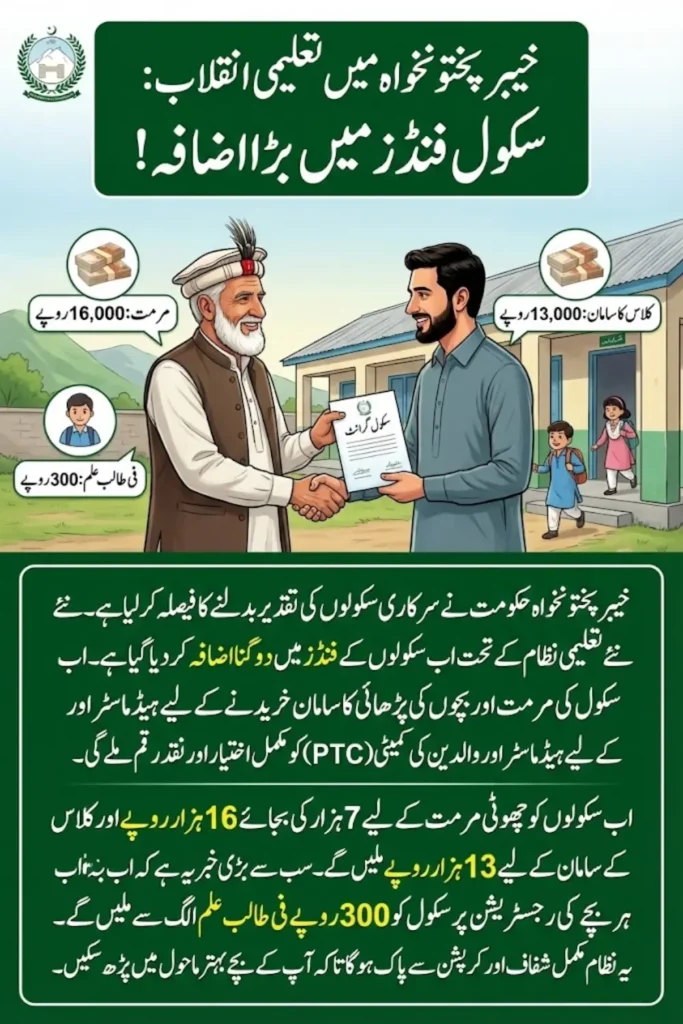
- Grant increased to Rs 13,000
- Charts, markers, learning aids
- Teachers no longer self-fund
🏫 Petty Repairs Grant
Fast maintenance of school buildings
- Grant raised to Rs 16,000
- Immediate small repairs
- Safe & functional schools
📈 Capitation Grant
Funding linked to student enrollment
- Rs 300 per student
- Encourages higher enrollment
- Performance-based support
Quick Actions / Key Points
- Funds distributed with clear categories
- PTCs manage school-level needs
- Transparency through audit trails
- Better classrooms, safer schools
“Behtareen hikmat-e-amli ka aaghaz”
Previously, policies were made without understanding the ground realities of a school in a remote village. The IPR framework changes this by focusing on Parent Teacher Councils (PTCs). By strengthening these councils, the policy ensures that the people who care most about the children—the parents and the teachers—are the ones making the decisions. This shift in policy is essential for creating a system that is responsive, efficient, and truly beneficial for the students.
You Can Also Read: Mera Ghar Mera Ashiana Scheme via NBP – Online Application, Fast Approval & Eligibility Explained
Key Education Reforms Announced in KP
The most significant highlight of these reforms is the approval of a new Parent Teacher Council (PTC) Grant Framework. This is the engine that will drive the entire reform process.
“Taleem sab ke liye, ab behtar mayaar ke saath”
Under this new system, the government isn’t just giving money blindly. They have categorized the needs of a school into specific areas. The reforms have introduced practical improvements that directly impact classroom learning and school management. The government has recognized that a school cannot function if it lacks basic supplies like chalk and charts, or if it has broken furniture. Therefore, the key reform is the restructuring and increasing of financial grants to ensure every rupee is spent where it matters.
You Can Also Read: CM Punjab Laptop Distribution Officially Starts in Lodhran – Student-Wise Rollout & Schedule
Focus on Transparency & Accountability
One of the biggest complaints in the public sector is corruption or misuse of funds. The IPR KP Education Reforms have tackled this head-on by introducing a Transparent Framework for PTC Grants.
“Hisab kitab mein koi ghalati nahi hogi”
This new system clearly defines how funds are allocated and used. There is no gray area anymore. The framework ensures:
- Clear Categorization: Everyone knows exactly which fund is for what purpose.
- No Confusion: Headmasters and PTC members have clear guidelines, reducing the risk of misuse.
- Audit Trails: With clear categories, it becomes very easy to track if the money was spent correctly.
This transparency is designed to build public confidence. When parents see that funds are actually being used to fix the school, their trust in the system increases.
You Can Also Read: Benazir Taleemi Wazaif January 2026 Qist Released – Amount, Eligibility & Payment Update
Practical Development Roadmap Explained
The reforms have moved away from vague promises to a concrete roadmap. The government has divided the grants into three specific categories to ensure a balanced approach to development. This division helps schools plan better and address real needs without delay.
“Mansooba bandi se taraqqi mumkin hai”
The three specific categories are:
- Classroom Consumables: Items used daily in teaching.
- Petty Repairs: Small maintenance works.
- Capitation Grant: Funds based on the number of students.
By separating these funds, the government ensures that a school doesn’t have to use money meant for books to fix a broken window. Each need has its own budget, ensuring smooth operations.
You Can Also Read: BISP January 2026 Qist Check Without 8171 Portal – SMS, CNIC & Offline Verification Method
Teacher Training & Curriculum Improvement Plans (Consumables Funding)
A major part of the roadmap focuses on what happens inside the classroom. This is addressed through the Classroom Consumables category.
“Asatiza aur talaba ke liye sahuliyat”
Previously, schools received a meager amount of Rs 6,000 for these expenses. This was often insufficient for buying charts, markers, dusters, and other teaching aids essential for a good curriculum delivery. Under the new reforms, this amount has been more than doubled to Rs 13,000.
This increase means teachers will no longer have to pay from their own pockets to buy teaching materials. It directly supports the curriculum by ensuring that the physical tools needed to teach are available. A well-equipped classroom leads to better student engagement and learning outcomes.
You Can Also Read: CM Punjab Solar Scheme 2025–26: How to Check Application Status by CNIC (Latest Update)
Maintenance and Infrastructure (Petty Repairs)
Small issues often become big problems if left unattended. A broken door lock, a leaking pipe, or a cracked window can disrupt the school environment. Previously, schools had a budget of only Rs 7,000 for such repairs, which was barely enough.
“School ki imarat ab mehfooz rahay gi”
The IPR reforms have significantly increased the Petty Repairs grant to Rs 16,000. This jump allows schools to handle minor maintenance immediately. They don’t have to write letters to the district office and wait for months to get a fan fixed. This autonomy ensures that the school infrastructure remains safe and functional for the children.
You Can Also Read: Mera Ghar Mera Ashiana Scheme Through Meezan Bank Shariah-Compliant Home Loan & Online Apply Guide
Monitoring, Evaluation & Performance Metrics (Capitation Grant)
Perhaps the most revolutionary step in these reforms is the introduction of the Capitation Grant. This is a performance-based metric that links funding directly to enrollment.
“Har bache ka hissa, school ko milega”
For the first time, the government has introduced a funding of Rs 300 per student. This serves two purposes:
- Direct Support: Schools with more students get more money, which is logical because their wear and tear and resource usage are higher.
- Incentive: It encourages schools to increase enrollment. The more children they bring to school, the more funds they receive to manage the facility.
This creates a self-monitoring system where schools are motivated to keep students enrolled and attending classes.
You Can Also Read: BISP 8171 January 2026 Qist Released – Eligibility Check, Payment Method & District Coverage
Conclusion
The IPR KP Education Reforms represent a mature and practical approach to governance. Instead of launching flashy schemes that look good on billboards but fail on the ground, the KP government has focused on the nuts and bolts of the system.
“Taraqqi ka safar jari rahega”
By empowering the Parent Teacher Councils, increasing funding from Rs 6,000 to Rs 13,000 for consumables and Rs 7,000 to Rs 16,000 for repairs, and introducing the Rs 300 per student grant, they have created a sustainable model. These reforms ensure that the money flows to where the students are. This transparency and practical roadmap will likely serve as a model for other provinces to follow, ultimately leading to a more educated and prosperous Pakistan.
You Can Also Read: Punjab Free Laptop Scheme 2026 – Eligible Students, Selection Formula & Distribution Updates
